




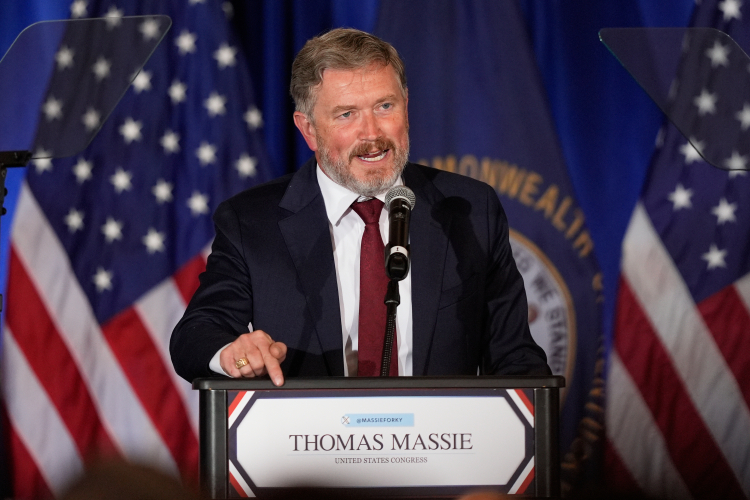
“I have come to the conclusion that an economic catastrophe must happen before a majority of my colleagues will get serious about curbing out of control government spending.” That’s then Rep. Thomas Massie on X in 2024. His post informs a surely minority (if not singular) view among libertarians that Massie isn’t a libertarian.
While Massie caucuses with free-thinkers, his views have much less to do with libertarianism than is commonly assumed. See the quote that opens this piece.
Implied is that with “out of control government spending,” the “catastrophe” is a future concept. No, excessive taxation is a now catastrophe. A libertarian conclusion would be that it’s tragic Americans are taxed so heavily that Treasury could be $34 trillion in debt (the number in 2024) without any alarm from Treasury markets. As falling Treasury yields since 1980 substantially indicate, it's the opposite of alarm. Excessive taxation is a catastrophe.
From there, a true libertarian in Massie would point to a much bigger, though totally unseen now catastrophe: all the would-be Nvidia’s, Amazon’s, Meta’s, Google’s, Apple’s, and Tesla’s that never formed because the federal government has been such a size consumer of precious, privately produced resources for so long. Massie drives a Tesla. Isn’t he aware of how many times Elon Musk nearly lost it all due to capital difficulties? Sorry, but libertarians focus on the unseen, including could-have-been Elon Musks if capital had been more plentiful.
Massie was one of two Republicans in the House to vote against President Trump’s “One Big Beautiful Bill” (OBBBA). This surely recommends him since the bill is in so many ways a tax increase on the people who, by virtue of being rich, are most capable of saving and investing. See the corporations mentioned above. Without rich people, none would exist. Except that the latter didn't explain Massie’s no vote. Instead, it was informed by what he described as a “debt bomb ticking.”
With individuals and businesses, the market gauges their capacity to borrow based on expected future incomings. Governments are no different, but for one thing: no one spends the money of others as carefully as they do their own. The bet here is that Massie has uttered just that line before.
In which case it should be evident to him that the national debt’s growth has been a logical effect of rapidly expanding U.S. borrowing capacity. In other words, excessive taxation of the rich.
In finance, they call it “coverage ratios.” Combine the latter with the motivating factor for politicians (spending the money of others), and it’s easy to see that the national debt is a market-driven effect of too much tax revenue now, and the expectation of much more in the future. Massie could have made this case, but instead made a case that ran opposite libertarianism, logic, and U.S. borrowing history: more taxes collected by Congress would cause it to find its inner thrift. Lots of luck there.
Then there’s the Epstein files. By all accounts, no criminal activity was found in the files. On the other hand, people were embarrassed, had their careers ruined, their marriages destroyed, or all three care of government. Releasing the files wasn’t libertarian. Letting the mob dictate governmental decisions never is.
Thomas Massie will long be the face of libertarianism. Despite what you’ve read here, that’s a good thing. That's because in these three areas, and perhaps more, he could be convinced to do a rethink? If not, libertarianism is too important to be misrepresented. Massie does that more than his most adamant proponents realize.
