




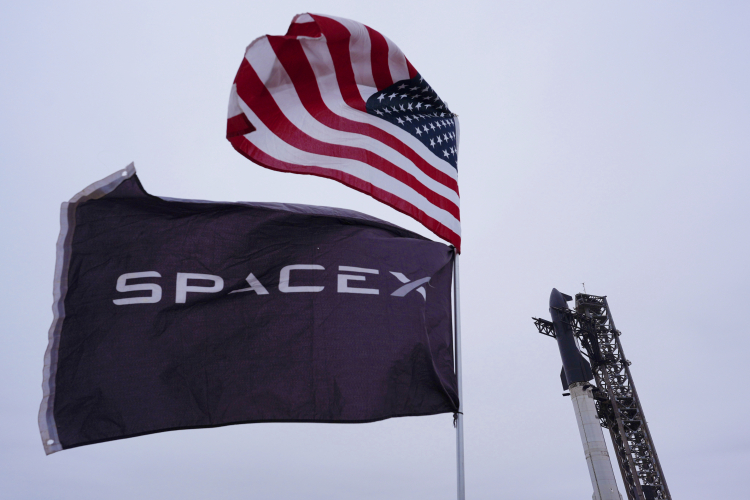
As is well known, SpaceX floated its shares last week. Elon Musk is the world's first, but surely not last, trillionaire. Let’s refer to Musk as the Frederic Bastiat “seen.”
From there, let’s pivot to Megan McArdle’s latest Washington Post column on the national debt. She writes that “There is only one way this kind of profligacy can end: in a fiscal crisis that forces Congress and the President to hike taxes and cut spending, very probably at the worst possible time, when the economy is already nose-diving for some other reason.” No, she can't mean that.
Let’s start with spending cuts “very probably at the worst possible time, when the economy is already nose-diving for some other reason.” Unless McArdle imagines the federal government extracts its spending power from Pluto, it can be said with 100% certainty that a shrinkage of economy-sapping central planning of precious resources is most crucial when the economy is “nose-diving,” no?
McArdle tells her flock that the onrushing outcome from the national debt has singular qualities of the “fiscal crisis” variety, but it would help if she might explain the timeframe. Treasury sells 30-Year bonds, but at present the yields on them roughly mirror what they did in 2007, and when the national debt was $9 trillion. When we factor in that Treasuries are the most owned income streams in the world, by far, we can ask if McArdle knows something the markets don’t? Hopefully the question answers itself.
Explicit in McArdle’s analysis is that more tax revenue will be the fix to what she deems a debt problem. Except that tax revenues have soared since 1980 (when the national debt was $900 billion) alongside rapidly rising debt. Why would more revenue be the fix this time? McArdle’s not saying.
Instead, she lectures readers for yawning. As she confidently predicts, we won’t be yawning for long. We’ll supposedly stop once we “make landfall on whatever hellscape we’re approaching.” Ok, but that’s not how markets work.
A relentless collision of optimists, pessimists, and in between, markets do our worrying for us free of any bias or emotion. Markets just are.
Confident “Everyone know this” about the coming fiscal crisis, unbiased markets disagree with McArdle. See yields on $39 trillion worth of Treasury debt. Does McArdle seriously think Treasury could run up all this debt if the “one way this kind of profligacy can end” is with fiscal crisis?
Which brings us to the real crisis, albeit one that we can’t see. Implied in the Treasury market’s sanguine nature about $39 trillion worth of debt is that the richest Americans (the top 400 taxpayers account for more federal tax revenue then the bottom 70% of taxpayers combined) aren’t just handing over gargantuan sums to Treasury now, but that “rich” in the future will make today’s “rich” appear poor by comparison on the way much greater revenue collection. Again, Musk won't be the last trillionaire. There’s your crisis, get it?
Without the wealth of the very rich, SpaceX wouldn’t exist today. The previous truth describes Apple, Amazon, Google, Meta, and Nvidia too. McArdle is distracted by the debt, while seemingly blithe to the multiples of SpaceX, Apple, Amazon, Google, Meta, and Nvidia that don’t exist today, and will not exist, because the rich are so excessively taxed.
The national debt is a symptom of the real crisis: too much tax revenue that’s robbing us of a much better present and future. It’s the “unseen” that matters. McArdle either yawns at the unseen or is unaware of it, and it compromises her analysis.
