




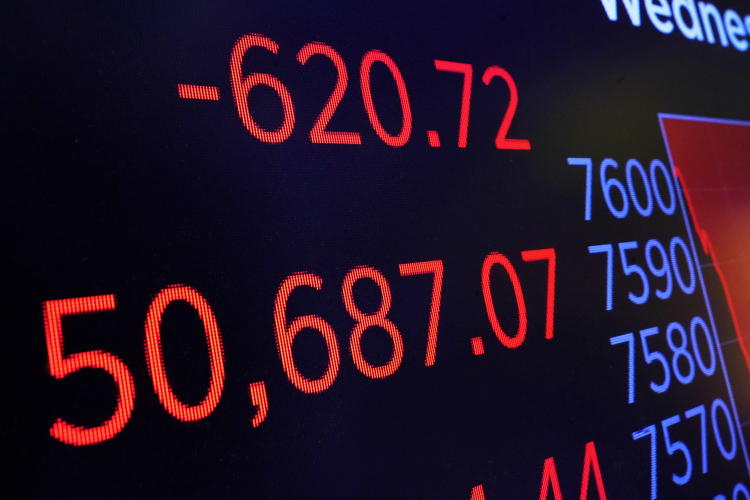
The S&P 500 recently reached another record high. Financial commentators celebrate each new high as proof of American prosperity. Politicians point to rising markets as evidence that economic policy is working. Millions of investors open their retirement statements and feel wealthier than ever.
And perhaps they are.
But before we congratulate ourselves too enthusiastically, it may be worth asking a simple question:
What if the measuring stick itself is changing?
Since 1963, the S&P 500 has risen from roughly 65 to more than 7,000. On its face, that appears to be one of the greatest wealth creation stories in human history.
In many ways, it is.
American businesses have transformed the world through innovation, productivity, and entrepreneurship. New technologies have improved living standards and created enormous wealth for investors.
Yet wealth can be measured in two ways: by the number of dollars we possess and by what those dollars can actually buy.
The distinction matters.
A dollar saved in the early 1960s purchases only a fraction of what it once did. Housing, healthcare, education, and many everyday necessities require far more dollars than they did a generation ago.
Consider something as ordinary as a pound of ground beef. In the early 1960s, it cost well under a dollar. Today it costs many times that amount.
Certainly, supply and demand influence prices. But have cattle become many times more valuable? Or has the purchasing power of the dollar changed?
The same question applies to homes, college tuition, medical care, and countless other goods and services.
When a homeowner sells a house for many times its original purchase price, substantial wealth may indeed have been created. But some portion of that increase may also reflect changes in the value of the currency in which the house is measured.
The same principle applies to stocks.
A rising market reflects many forces: innovation, productivity, earnings growth, population growth, and investment. But over long periods, monetary policy and inflation also shape the numbers investors see on their statements.
That does not mean inflation creates prosperity. History suggests otherwise. Inflation often erodes purchasing power and can leave investors with disappointing real returns even when nominal asset prices rise.
The 1970s offer an important lesson. Investors saw stock prices rise in dollar terms, yet many experienced poor returns after accounting for inflation. The lesson is not that inflation creates wealth. It is that nominal gains and real gains are not always the same thing.
This distinction helps explain one of the great paradoxes of modern life: why markets can reach record highs while many households feel they are merely keeping pace.
They are not imagining it.
Rising account balances do not automatically translate into greater economic security. Wealth measured in dollars may be increasing. Wealth measured by purchasing power may tell a different story.
Throughout history, governments facing large obligations have often resorted to expanding the supply of money. Ancient rulers reduced the precious metal content of coins. Modern governments use more sophisticated tools, but the underlying principle remains familiar: when money grows faster than the production of goods and services, purchasing power tends to decline.
The effects are gradual and often difficult to detect. Wages rise. Asset prices rise. Government spending rises. The numbers become larger, creating an appearance of prosperity even when real gains are more modest.
The challenge for policymakers is therefore not simply to produce higher asset prices. It is to preserve the integrity of the measuring stick itself.
When citizens can no longer distinguish between real wealth and monetary illusion, economic statistics become less informative, public trust begins to erode, and financial success becomes increasingly difficult to measure.
Democracies face a perpetual temptation: to enjoy benefits today while postponing the costs until tomorrow. The costs, however, are rarely eliminated. They return in the form of larger deficits, mounting debt, and a currency that purchases less over time.
Economic growth should come from innovation, productivity, investment, and entrepreneurship—not from the quiet erosion of the currency itself.
The next time the market reaches another record high, investors should celebrate.
But they should also ask a deeper question:
Not how many dollars their assets are worth.
But how much prosperity those dollars can actually buy.
