




Technology has been at the forefront of consumer attention since Steve Jobs dreamed of bringing the computer into every home and changing how we interact with that technology. That technology was the bicycle to propel our minds and vision forward. The race has never just been about the machine. It has been about how we reach it. One of the earliest personal computers was sold back in 1971. It was called the Kenbak-1, designed by John V. Blankenbaker, and from there we've seen an explosion from Apple to Microsoft. And with AI entering the arena, technology is rapidly changing how we interact with it.
Now in 2026 that frontier sits in our hands, whether large cell phone screens with 6.9-inch dimensions or foldable screens made to be more compact. So, what comes next? The field has already picked its answer. Put your phone back in your pocket and talk to the technology instead. The field is wrong on this.
Here is the fact. Phones are too heavy and they keep getting bigger every year. Oddly enough we like big screens, they're easy to read and easy to use. But a phone now runs anywhere from 150 grams to over 220 grams, and foldables push right past 250 grams. Heavy. And we hold that weight in our hands for hours every day. It can wear on you over time, holding a giant brick. The good part is the direction is finally turning. Apple put out the iPhone Air in 2025, a big screen that actually felt light in your hand, and if you ever picked one up you noticed it right away. Samsung tried the same with the S25 Edge before they shelved it for poor sales. So, the ideal is moving the right way toward technology that is easier to use and less taxing on our day-to-day lives.
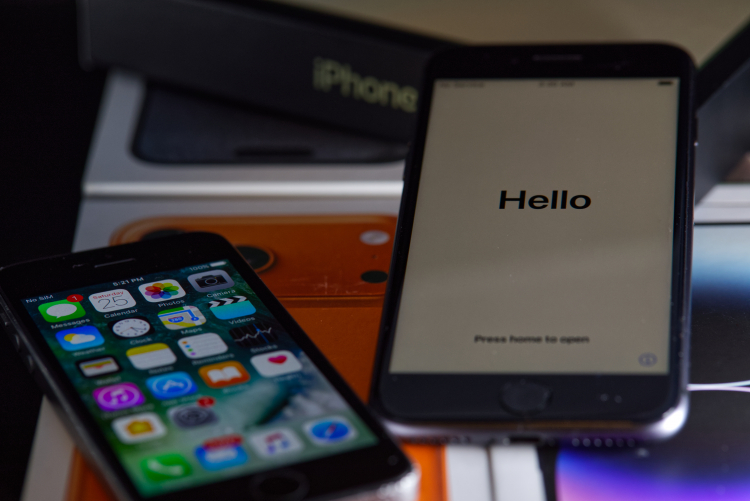
That is how Steve Jobs would have seen it. Because the real problem in 2026 is not that we don't have advanced phones. We have had advanced phones since the first iPhone redefined the whole idea back in 2007, almost twenty years ago. Nearly twenty years later, and it is still the same slab of glass. A little thinner. A little lighter. Now it folds. It has AI. But nobody has touched what the thing actually is. BlackBerry showed us how to text, Apple how to touch, but the shape froze, and the industry has spent two decades polishing a brick.
This idea that the next frontier is a phone in your pocket and we’re talking to an AI like some assistant is idealistic and far detached from reality. People are vision first, audio second. We want to see and touch our world, not talk to it. Putting the phone back in your pocket is not a breakthrough, it is a cop-out on what people actually want. And people already do not want a heavy phone in their pocket, so hiding the phone does not fix the problem, it dodges it.
So, what does the new frontier look like? Well, imagine a phone in your hands, projected in several ways. Maybe something small like a ring, and when you flip your hand over, the camera faces you and a display appears. Cameras and AI map your face, eyes, and fingers to adjust the display. The only weight is the ring, not a 250-gram brick. Another way to look at it is to take the Google Glass idea, but project it in your hands. No need for glasses. You wear an earpiece maybe, along with a ring, and in tandem they create a display. Google Glass had the right idea about the next frontier, but the problem is we should not be distracted by something sitting in front of our eyes and face. It needs to be actionable technology that appears in our hands.
The next frontier is not AI. Large language models are software, not hardware. They are the engine, not the bicycle. So, the real question is simple. What is the next bicycle, and how do we ride it? There are patents and ideas already circling this, but they keep missing the obvious part. Technology has to get more mobile without the weight tax.
A personal computer you wear, with a screen you pull up right in your hands when you want it. No phone to hold. Nothing in your pocket. Just the display, sitting in your open hands, weighing next to nothing. That is the frontier. A screen that finally drops its weight. The field is pouring chips into AI as the software, but the brick stays. Maybe it folds twenty ways, but it stays. Life and technology are about ease of use and mobility. People will not stand in public reading their private thoughts out loud, but they will always want less to carry.
