




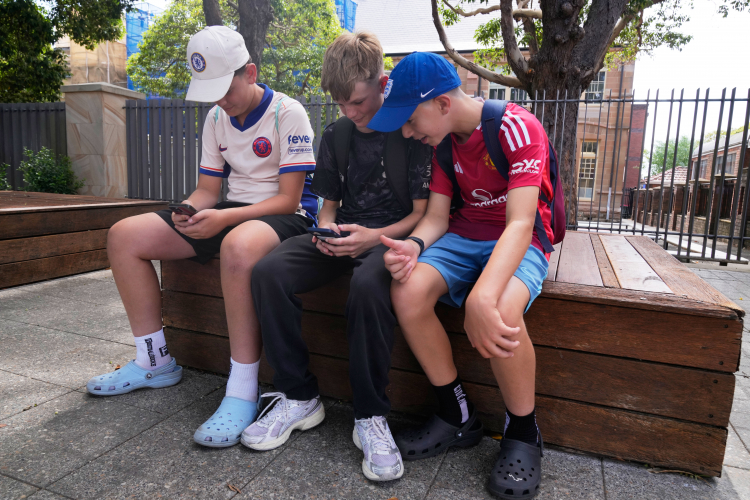
President Ford once “told” New York City to “Drop Dead.” Aussie youth are presently telling Parliament “You Don’t Matter.” Think the Social Media Minimum Age Act.
Implemented in 2025 to establish a national age limit of 16 for social media including Instagram, TikTok, and Snapchat, the New York Times recently reported that “the law seems to have fallen well short of bringing about a sea change in teenagers’ social media usage.” Well, yes. “Even though millions of accounts were deactivated, about seven in 10 parents whose children had already been on the platform said they still had accounts.” This outcome was easily predictable.
Legislative bans of markets don’t result in the disappearance of the market. Aussie youth very much treasure social media usage, and it continues to this day. A law was passed, but markets bend to no law.
More important for the purposes of the Social Media Minimum Age’s failure is that Aussie youth undeniably know technology better than their elders in Parliament do. Which means they quickly devised ways, including disguises, to continue enjoying what they’d long enjoyed.
Which leads to a speculation: Aussie legislators made things worse. Remember, millions of social media accounts were deactivated. Think about the latter with parents in mind. The lack of a law logically enhanced crucial parental vigilance. To the extent that they cared about any, a little, or a lot of social media usage, they had to get involved.
It speaks to the shame of account deactivation by legislative decree. It was the existence of the accounts in the names of their young users that gave parents at least some control. Was parental oversight foolproof?
The speculation here is no. See above. Much as it’s popular to say “these kids today” don’t know much, they surely know technology. Still, what prevailed in Australia before the Social Media Minimum Age Act was an explicit parental barrier to the accession of good, bad and in between.
Which means deactivation by legislative decree only succeeded insofar as it fractured the parental barrier a little or a lot that formerly restrained young people from doing what they shouldn’t. With the Social Media Minimum Age Act in place as of 2025, it was as though young people were off social media.
Except as we know, they weren’t. They figured out ways around the law, including disguises which were ways around laws and parents.
While social media accounts in the names of young people created a specific ability for parents to be vigilant, the closure of the accounts in the name of helping parents paradoxically made their jobs much more difficult. Think about it.
With the law the law, kids once again had to devise workarounds. And more skillful than their parents on the matter of technology, they’ve largely succeeded. Which means the Social Media Minimum Age Act only succeeded insofar as it increased youthful disdain for the law, while encouraging kids to hide their actions from parents. And that’s not all.
Life happens on the margin. This matters here because while to some extent parents were going to continue to police the activity of their kids online no matter what, it’s no reach to suggest some Aussie parents relaxed their vigilance once Parliament obnoxiously substituted itself for parents.
To say legislators should have foreseen the many negative effects of Social Media Minimum Age is shooting fish. Only for the story to get worse. Having failed excessively, it’s evident lessons haven’t been learned in Canberra. Instead, there’s a desire to “double down.” All over Australia the kids are surely laughing.
