




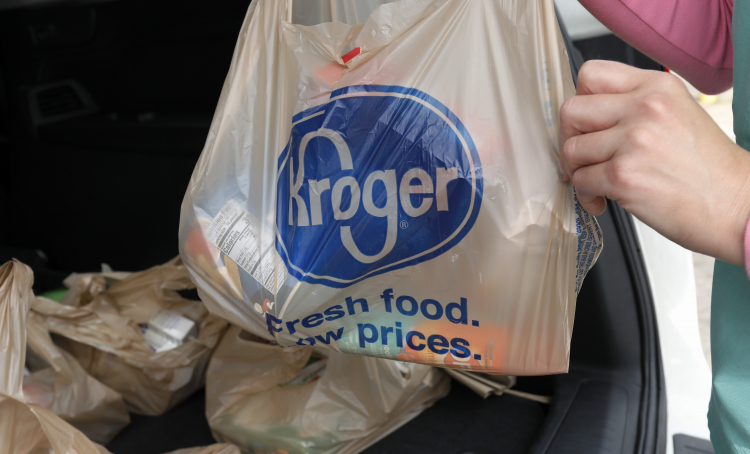
Kroger, owner of several grocery chains and the country’s fourth largest retailer, recently announced it would be using digital tags in its stores. Kroger is following the lead of Walmart, the nation’s leading retailer. Walmart will soon be using digital labels in every one of its 4,600 locations. The adoption of digital tags has generated controversy because it facilities surveillance pricing, more accurately called personalized pricing.
Personalized pricing involves the use of technology, including artificial intelligence, to analyze data such as shopping history, email sign ups, and how many different retailers are within a reasonable distance of the consumer’s address. This data is used to determine the customer’s pain point, meaning the highest price a consumer is willing to pay. Personalized pricing has been attacked for violating consumers’ privacy rights. However, the data used is either publicly available or has been voluntarily provided by customers to the store so the consumer can receive discounts and specials.
Another objection is that personalized pricing allows businesses to discriminate against certain groups by charging them more for the same product than they charge other groups. This ignores the fact that under personalized pricing the prices are based on objective information including the customer’s own buying habits. Furthermore, if a store overestimates how much a consumer is willing to pay, the consumer will not purchase the product and the store will have to reevaluate how much its customers are willing to pay or else risk losing them. Critics of personalized pricing also never consider that while consumers may be charged more for some goods, they will also be charged less for other goods. If businesses are allowed to perfect the use of personalized pricing, it can result in a system where stores can maximize profits by matching prices with an individual consumer’s demand for the product. The results will enhance market efficiency and actually benefit consumers by allowing them to align their spending with their preferences, and adjust their purchasing patterns to save money.
Unfortunately, there is a movement to outlaw personalized pricing. During the Biden Administration, the Federal Trade Commission (FTC), then under the leadership of Lina Khan, who advocated for a dramatic increase in the federal government’s control of private businesses, launched a study on personalized pricing. The study was halted by President Trump’s pick for FTC Chair, Andrew Ferguson, who had dissented from the study’s conclusions while he was an FTC Commissioner under Khan. He has done little on the issue since he assumed leadership of the agency.
Legislation outlawing personalized pricing has been introduced in Congress but is unlikely to pass. The unlikelihood of federal action against personalized pricing has led opponents of personalized pricing to turn their attention to the states. New York has passed legislation forbidding landlords from using algorithms to set rents while Maryland has passed a law outlawing the use of personalized pricing for tax-exempt food. The law, which goes into effect in October of this year, applies to food retailers with at least 15,000 square feet. It also applies to food delivery services. Violators will have a 45-day grace period to correct the violation, following which they will face a fine of up to $10,000. The amount will increase to $25,000 for a repeat offense.
California will likely soon ban personalized pricing. The California Assembly recently passed legislation (A.B, 2564) outlawing surveillance pricing. The bill allows state and local governments to sue businesses that violate the law for monetary damages. It also allows private citizens to bring lawsuits seeking injunctions forcing companies to stop using personalized pricing. The bill is now before the California Senate where it will almost certainly pass and be signed by Governor (and likely 2028 presidential candidate) Gavin Newsom.
Personalized pricing enables retailers to tailor prices based on a consumer’s demonstrated preferences, increasing or decreasing prices based on their evaluation of what the consumer is willing to pay. Critics of this practice should remember that it relies on information voluntarily provided by consumers, and customers are free to refuse to purchase a good if the price is too high. Therefore, personalized pricing does not involve any violation of a consumer’s privacy or other rights. Those concerned about violations of privacy may want to focus more on the federal government’s collection of information on American citizens without their consent then the voluntary collection of information by private businesses.
