




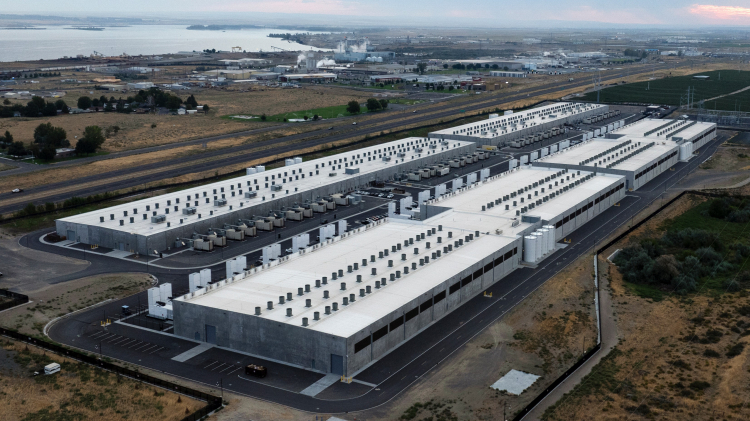
Public sentiment regarding AI, and the data centers that drive it, is becoming increasingly negative, yet AI continues to receive trillions of dollars from investors on Wall Street and beyond. Despite the mind-blowing levels of investment, many policymakers don’t share the same enthusiasm, and in many cases, policy trends are moving the opposite direction.
Recently, Seattle followed New York’s lead by imposing a one-year moratorium on new data centers. At the same time, Illinois and Arizona have halted tax incentives for new data centers. These actions aren’t outliers—at least 14 states across the country are taking steps to halt or slow data center development. This comes amid growing concern regarding affordability and environmental impacts, and how this infrastructure, and artificial intelligence more broadly, could affect local communities. Gallup recently found seven in ten Americans oppose constructing data centers in their community.
Ahead of the November midterms, Congress is also joining the fight. Just last week, Ranking Member Frank Pallone, the likely next Chair of the powerful House Energy and Commerce Committee, came out in support of a national data center moratorium. Other members have introduced legislation requiring data centers to bring their own power and other safety measures related to AI.
There is a disconnect between how Wall Street views this game-changing new technology vs. how states, local communities, and increasingly Congress view it.
Investors have accurately identified extraordinary upsides tied to AI: it will unlock massive new efficiencies and innovation, leading to economic growth, while helping us maintain our technological and competitive edge against China. But focusing too much on these economic benefits while downplaying the political dynamics could create significant risk—especially in an election year.
Voters—and increasingly lawmakers—view AI and data centers as synonymous, and their concerns about impacts on energy cost and water use, among other issues, are leading to discussions about delaying approval processes, moratoriums, and other threats that could derail development.
The challenge for this industry is that the growing opposition is not limited to community or environmental activists; it extends to farmers who don’t want to see construction on prime farmland, homeowners upset about rising utility costs and local tax incentives for large corporations, and people who are looking for outlets to express their broader opposition to AI. Communities across the country are readying their pitchforks and torches, and if data center companies don’t heed these warning signs, the impact on public perception could crystallize.
We closely monitor and appreciate both the financial and political worlds and have, too often, witnessed firsthand the disconnect between the two. When we speak with investors and private companies, their optimism for AI—its impact on our economy and competitiveness—is palpable. With many in Congress, we often hear skepticism and caution: AI must be developed the “right way” in order to reap the benefits while minimizing job losses, energy cost increases and mitigate any negative impacts on their constituents.
That does not mean the AI buildout should stop. However, it is crucial that data center developers heed these trendlines and act accordingly. This includes engaging the community before the company needs their support, allowing developers to address concerns at the front end, discuss the benefits, and provide community members space to have a voice prior to a project’s construction. Similarly, companies need to ensure the economic benefits are shared directly by community members. Data centers drive construction jobs, support local property taxes, and support a broader ecosystem of suppliers, but do most people recognize those benefits in their day-to-day lives? Probably not.
Developers should incorporate investments that clearly address and ideally mitigate local concerns. By listening and engaging, companies will understand what the community needs and be able to work thoughtfully to address those matters. Oracle recently announced a partnership to plug orphan wells near one of their data center projects. Google recently helped fund bonuses for teachers in Louisiana through increased tax revenue from one of their data center projects. Amazon and Equinix are leading the way on reducing water use through air-cooling and other measures. Developers should look at similar efforts to measurably improve the lives of the communities they operate in.
Building data centers without local community support will only drive backlash, slowing projects and undermining U.S. leadership in this sector. Meeting this challenge requires building deep community roots and frequent engagement with local constituencies and lawmakers. AI and data center developers are not used to going slow, but this is a moment where going slow may be the only way to go fast. If they don’t, federal, state and local policymakers seem prepared to slam on the brakes.
