




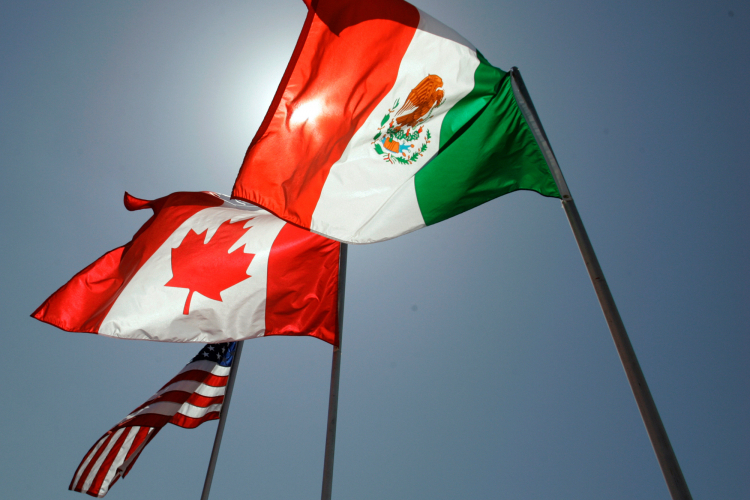
I believe the Trump Administration made the right decision by not automatically renewing the United States-Mexico-Canada Agreement this week.
That shouldn't be viewed as a rejection of free trade. It should be viewed as an acknowledgment that trade agreements deserve stringent review. The purpose of these reviews is not to create uncertainty or political theater. It is to honestly evaluate whether an agreement negotiated years ago is still producing the outcomes it was intended to deliver for American workers, manufacturers, farmers, and small businesses. In other words, the review is not the problem. The review is exactly how the agreement was designed to work. America should welcome that process because strong trade agreements are strengthened through honest evaluation, not automatic renewal.
America has always benefited from strong trade relationships. Mexico and Canada remain our two most important economic partners, and that should continue. But supporting free trade also means recognizing when markets change, industries evolve, and competitive realities shift. No agreement should become permanent simply because it already exists. It should earn renewal by continuing to serve the people and businesses it was designed to support.
Consider the beer industry.
Over the past two decades, imported beer has grown from approximately 11 percent of U.S. consumption to nearly 25 percent of the American market. More than 80 percent of those imports now come from Mexico. Meanwhile, America's largest breweries have seen production capacity fall from more than 80 percent to roughly 65 percent. If current trends continue, that figure is projected to decline even further over the coming years.
Those numbers tell a story that extends far beyond beer.
Every brewery supports an ecosystem of American businesses. Farmers growing barley and hops, aluminum manufacturers producing cans, trucking companies moving freight, distributors, restaurants, retailers, and countless small businesses all depend on a healthy domestic brewing industry. When manufacturing shifts elsewhere, the impact spreads far beyond a single product or company.
So why has this shift occurred?
Consider that American brewery workers earn more than $77,000 annually and receive strong union benefits. In Mexico, average brewery workers earn only 3,500 annually. Combine reduced labor and production costs with lower taxes, significantly different regulatory structures, and export-focused policies, the competitive imbalance becomes untenable. No American manufacturer, regardless of how efficient, can compete indefinitely when the playing field itself has become so incredibly uneven.
The question is not whether American workers can compete. They can. The question is whether the current economy supports us asking them to compete under the same rules.
Beer illustrates what is a much bigger issue. Across industry after industry, American businesses are being asked to compete on a playing field that is no longer level.
Whether we are discussing manufacturing, automotive production, agriculture, or other industries, policymakers should be asking the same question throughout this review. Are our trade policies encouraging investment in American communities, or are they unintentionally rewarding companies for moving production elsewhere? Are they strengthening North American competitiveness, or creating incentives that leave American workers at a disadvantage?
These are not arguments against trade. They are arguments for getting trade right.
Small businesses understand this better than anyone. They compete every day against larger companies with greater resources. They do not ask the government to eliminate competition. They simply expect the rules to be fair. They expect success to be determined by innovation, quality, service, and productivity rather than structural advantages that exist outside their control.
That is why this review should be welcomed, not feared.
The USMCA replaced NAFTA with important improvements, and it has strengthened North American trade in many respects. But successful agreements should never be immune from honest evaluation. The strongest agreements are the ones that adapt to changing economic realities while preserving the partnerships that benefit all three countries.
The goal should not be to dismantle the USMCA. Nor should it be to rubber stamp its renewal simply because it has reached the review stage. The goal should be to preserve what works, address what doesn't, and ensure the agreement continues to support American workers, American manufacturers, and American small businesses for generations to come.
Trade remains one of America's greatest economic strengths. But the strongest trade agreements are those that evolve with the economy, reward investment, encourage innovation, and create opportunity on both sides of the border. If this review produces a stronger agreement that accomplishes those goals, taking the time to get it right will have been well worth it.
