




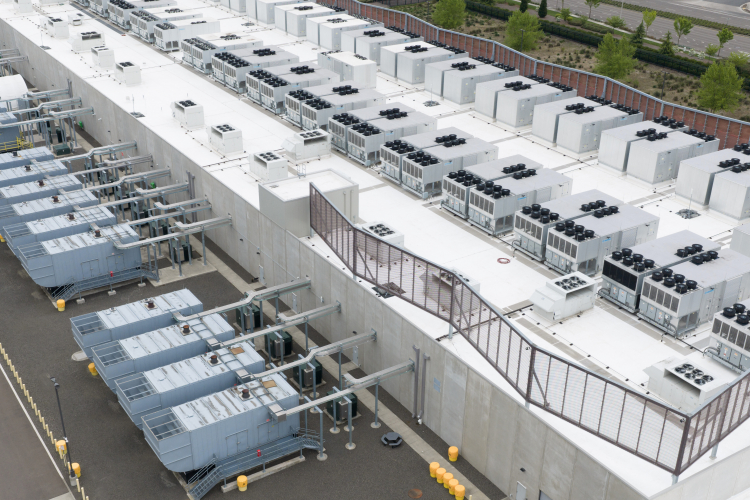
Data centers, and the $1 trillion+ that is being invested in their creation, are “causing” overall weakness in the U.S. economy. That’s according to former Biden White House economic official, Jennifer Harris.
Writing in the New York Times, Harris asserts that “the artificial intelligence buildout is expected to rival or surpass previous technological booms at their peaks — rail, electrification and the internet revolution.” This is bullish, right? Not according to Harris.
She laments that AI “is vacuuming up so much of our land, talent, semiconductor chips, building materials and, above all, so much of our money that it is beginning to crowd out the rest of the economy.” No, that’s not true. Harris misunderstands credit, and specifically what it is.
Credit is not money. Credit is resources (goods, services, and labor), which means it’s produced. The more production there is, the more savings and investment.
Please think about this with all the investment in AI. The latter isn’t about the consumption of resources, it’s about creating infrastructure that will set the stage for enormous increases in available resources.
For background, consider the cable industry and the then impressive sums invested in the 1970s to wire rural houses first, and then all houses for an expanded suite of television offerings. What happened in the early 1970s first set the stage for ESPN, Showtime, HBO, and C-SPAN, but the same cable infrastructure eventually set the stage for the rollout of the internet in the 1990s and beyond, along with the arrival of Facebook, Google, Amazon, Netflix, and countless other companies that exist today thanks to intrepid investment from long ago.
In contemplating what came before, it’s best to shift our gaze to data center potential. Their construction accounts for the majority of AI investment at the moment, and it among other things gives life to the genius of large language models (LLMs) made possible by Nvidia-created chips. Rich as Jensen Huang has become, it's well known inside Nividis that his fortune will ultimately pale in comparison to the value of the commercial ideas that emerge from Nvidia technology.
Harris would be wise to internalize the above truth. While she contends that AI investment is taking place at the expense of the overall economy, she ignores yet again that credit, investment, loans, and all other sources of finance are once again produced.
As the expected surges of wealth related to AI investment today signal, the $1 trillion worth of investment by Google, Amazon, Meta, and Microsoft that keeps Harris up at night will be a fraction of the wealth created as a consequence of their expenditures. Said another way, the effect of all this investment will set the stage for enormous increases in credit, and the rise of remarkable corporations that would not exist absent the initial, and sizable investment that so troubles Harris in the present.
In short, there’s no crowding out from AI investment, rather investment begets a great deal more of it. If AI and the data centers it has birthed can live up to even a fraction of their promise, the effect will be a much bigger surge of investment and economic growth made possible by the initial $1 trillion allocation.
