




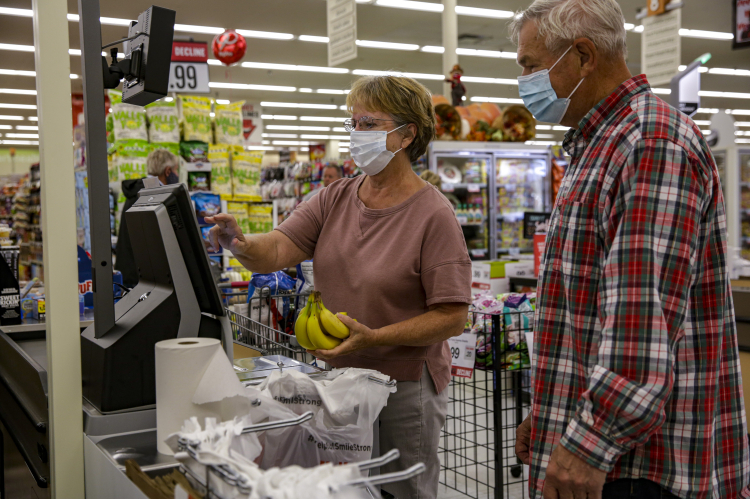
Self-Checkout lanes are under attack. Lawmakers in several states are pushing fines and staffing mandates to limit their use, arguing the machines cost jobs and enable theft. But the debate misses the real question: should politicians decide how private businesses operate, or should retailers and consumers decide for themselves whether self-checkout is worth it?
The answer should be obvious. Installing self-checkout is a business judgement, not a policy question. Retailers invest in the technology because they believe the savings, lower labor costs, faster checkout, happier customers, outweigh the cost of buying and maintaining it. If they’re wrong, they pay for it: through loss of profits, angry customers, or theft problem they created and now have to solve. Taxpayers and politicians bear none of that risk, and they shouldn’t get a vote.
Theft is often cited as a justification for restricting self-checkout, yet this argument raises an obvious question. If theft increases because a retailer chooses to use self-checkout, why should the government intervene? The financial losses belong to the store, giving retailers every incentive to adjust their business model. They can hire additional attendants, improve security, limit self-checkout lanes, or remove the technology altogether if the costs exceed the benefits. In a competitive market, businesses that fail to make those adjustments pay the price.
History shows that technological progress has always displaced certain jobs while creating new opportunities. Before electronic computers existed, the word “computer” was a job title. Businesses, universities, and government agencies employed entire floors of workers whose sole task was to perform basic arithmetic by hand, adding columns, computing trajectories, checking figures for engineers who had no other way to do the math. It was tedious, repetitive work, and it employed thousands of people. Imagine if the government had intervened to protect those jobs, capping how many calculating machines a company could install, or requiring firms to keep human “computers” on staff alongside the new technology. The postwar boom in aerospace, finance, and eventually the entire computing industry itself would have been throttled in its crib, all to preserve a job that machines could do faster and cheaper. The automobile replaced the horse-drawn carriage workers, ATMs reduced the need for routine bank transactions, and automation transformed manufacturing. While these changes were disruptive for some workers, they also increased productivity, lowered costs, and helped raise the living standards over time. An economy that tries to preserve every existing job risks preventing the innovation that creates tomorrow’s industries.
The market has never promised that every job will exist forever. It rewards businesses that find more efficient ways to serve consumers while encouraging workers to develop skills that remain valuable. As technology changes, labor naturally shifts toward industries where it creates greater value. Attempts to freeze the economy in place by protecting specific jobs only slow the process that has historically raised productivity, wages, and living standards.
Self-checkout was never really about machines replacing cashiers, it’s about who gets to make economic decisions – businesses and consumers, or politicians trying to legislate the past back into existence. Retailers should be free to test new technology. Customers should be free to accept or reject it. Workers should be free to move toward opportunities that pay better than the ones automation eliminate. A free economy doesn’t get richer by freezing jobs in place. It gets richer by letting people build what comes next. When businesses compete to lower costs and improve service, consumers, not politicians, are ultimately the ones who decide which innovations succeed.
