




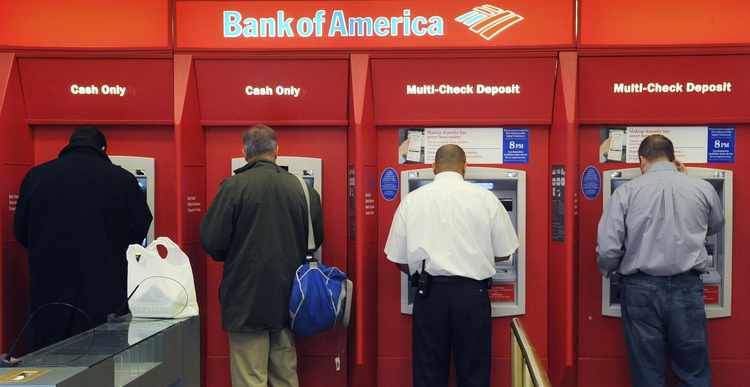
This summer, soccer fans from around the world will pour into SoFi Stadium in Los Angeles. In New York, they can catch a Mets game at Citi Field. In Charlotte, they can watch the Carolina Panthers at Bank of America Stadium.
But here is one thing they cannot do: avoid Live Nation or Ticketmaster’s fees by walking into a local bank branch, opening a banking app, and buying tickets there instead.
That oddity reflects a little-known legal wall, rooted in the Great Depression, that bars banks from offering many nonbanking goods and services, including tickets, travel services, and retail-shopping tools. Banks may spend millions to put their names on stadiums. They just cannot use their customer relationships, payments infrastructure, and digital platforms to sell customers a seat inside them.
The United States is unusual in this respect. Most major market economies permit some form of universal banking, which allows banks to offer a broader mix of financial and retail services. In those countries, consumers—not Depression-era legal categories—decide whether they want commerce and banking bundled together.
American law cuts both ways. Banks cannot enter many retail markets, while retailers and technology firms cannot offer core banking services without a charter. Walmart MoneyCenter can cash checks and sell money orders, but it cannot offer customers a bank account. Apple Pay, Google Pay, and peer-to-peer payment platforms can sit between consumers and their banks, but they cannot fully become banks themselves.
The fear behind this separation is old, and was not entirely irrational. Populists from Andrew Jackson to Louis Brandeis worried that large banks could use their control over credit to subsidize affiliated businesses, favor insiders, or cut off rivals. Federal deposit insurance later sharpened those concerns by giving banks a government-backed funding advantage. Regulators also feared that banks would use insured deposits for risky ventures, then leave taxpayers holding the bag.
So Congress and regulators drew a bright line: banking on one side, commerce on the other. Better, the theory went, to block the combination outright than police the risks later.
A century ago, that logic had more force. The U.S. banking system had thousands of banks, but little competition. Interstate branching was forbidden. Only some states allowed banks to branch within their own borders. Regulators approved new banks only if applicants could show there was insufficient competition from existing banks.
In practice, the government protected local banking franchises from competition to prevent failures and protect the deposit insurance fund. A town or city might have only a handful of banks, sheltered from outside rivals by law. Banks held local power not because they outcompeted rivals, but because regulators kept rivals out.
That made the wall between banking and commerce look like a safeguard. If banks enjoyed government-protected positions in financial markets and subsidized capital access through deposit insurance, perhaps they should not use that privilege to muscle into retail markets. That approach preserved bank stability. But the absence of competition also helped produce the old joke about bankers’ hours: a comfortable life for protected bankers, and fewer choices for everyone else.
Those conditions no longer define American banking. Interstate branching is ordinary. Online banks, fintech firms, payment apps, brokerages, and technology platforms compete for deposits, payments, loans, cards, and customer attention. Many consumers now carry their bank in their pocket, and it may have no branches at all.
Competition policy has changed, too. Modern antitrust law asks whether conduct harms consumers, not whether a business model offends an old structural taboo. The question should be whether a bank misuses market power, ties customers unfairly, or shifts risk onto insured deposits—not whether ticketing, travel, or shopping looks too “commercial” for a bank to touch.
Bank regulation has grown more sophisticated, as well. Regulators already supervise capital, liquidity, affiliate transactions, operational risk, third-party relationships, and conflicts of interest. Commercial activities need not sit inside the insured depository institution. They can operate through separately capitalized affiliates or subsidiaries, with limits on guarantees, funding, commingling, and exposure to the bank.
This is not a call for letting banks turn insured deposits into venture-capital slush funds. It is a call for replacing blanket prohibitions with clear guardrails. Keep insured banks safe. Prevent self-dealing. Police anticompetitive conduct. But do not pretend that selling a concert ticket through a bank app is inherently more dangerous than routing payments through a technology platform that already sits between the customer and the bank.
The current asymmetry is especially hard to justify because commercial firms have long offered financial products. Sears, Roebuck & Co. grew from a Chicago-based watch seller into a national retailer with millions of credit card customers. It owned Allstate Insurance and Dean Witter Reynolds, then launched the Discover Card and payments network.
Today, millions of consumers use nonbank fintechs, Apple Pay, Google Pay, and peer-to-peer payment platforms. Fintechs may soon gain greater access to Federal Reserve payment rails, one of the last major privileges of a bank charter. If nonbanks can keep moving closer to banking, banks should be allowed to move closer to commerce, subject to sensible limits.
Consumers have benefited from those shifts. Digital wallets, peer-to-peer payments, online lending tools, and nonbank financial platforms have added convenience and competition. Banks could do the same in the other direction, using trusted customer relationships, identity-verification systems, fraud controls, and digital platforms to offer safer and more convenient retail services.
That could mean buying event tickets, booking travel, managing subscriptions, or integrating payments with everyday shopping in ways that reduce friction and fees. It could also help consumers who already rely on bank branches or banking apps, especially in communities underserved by other digital platforms.
Congress does not need to demolish prudential regulation to modernize the law. It can start by allowing well-capitalized banks to offer defined commercial services through ring-fenced affiliates, subject to risk limits, transparency rules, and antitrust enforcement.
The old wall between banking and commerce was built for protected local banks, paper checks, and branch-bound customers. That world is gone. Consumers should not be stuck with a monopoly ticketing platform because the law still thinks their bank lives in 1933.
