




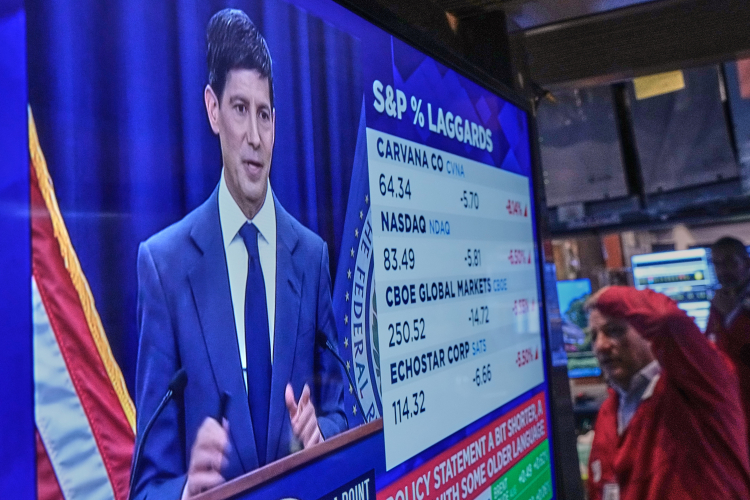
This wasn’t egg on the face. It was a whole omelet.
On Monday, Fed Governor Christopher Waller was effectively putting a rate hike back on the table if this week’s core inflation number came in hot. On Tuesday, the CPI report answered him: no heat, no spiral, no case for a hike.
Prices fell in June. Core CPI was essentially flat. Real wages rose.
That is not a green light for the Fed hawks. It is a stop sign.
Waller should not have been flirting with the nonsense of rate hikes into an energy-price shock to begin with. It’s both foolish and ignores history—both Greenspan and Bernanke successfully held steady or cut during energy price shocks.
Why? A stagflationary oil-price shock already does much of the contractionary work of a rate hike. It taxes consumers at the pump, cuts real wages, drains purchasing power, and slows demand without any help from the Fed.
The June CPI report shows why patience is the right call—and rate cuts should not be off the table.
The Consumer Price Index fell 0.4 percent in June, the largest monthly decline since the Covid shock of April 2020 and far better than market expectations. Core CPI, which excludes volatile food and energy prices, was essentially flat. On a year-over-year basis, headline inflation fell to 3.5 percent, while core inflation dropped to 2.6 percent.
Energy prices fell 5.7 percent. Gasoline prices fell 9.7 percent. What energy gave to inflation in May, energy took back in June. That is just one more reason why the Fed should not jerk monetary policy around in response to oil and gasoline swings.
June’s inflation improvement was not limited to gasoline. Core goods prices fell. Core services were flat. Shelter costs posted their smallest monthly increase since early 2021. Medical care services fell. Prescription drug prices fell and are down over the year. Used cars and trucks fell again. New vehicle prices were flat. Motor vehicle insurance fell sharply for the second month in a row.
This is what broad disinflation looks like.
There are still stubborn pockets. Beef remains high. Milk rose. Lettuce and tomatoes remain elevated over the year. No serious analyst should pretend every household price problem has vanished. But the direction of travel is unmistakable. Inflation is cooling, and that cooling is showing up in categories that matter to working families: gasoline, cars, car insurance, medical care, and drugs.
The wage data make the report even stronger. Real average hourly earnings rose 0.8 percent in June. Real earnings are now up over the year. That is the metric that matters in Trump Land. The purpose of economic policy is not to generate abstract spreadsheet gains for Wall Street. It is to raise the real wages, purchasing power, productivity, and living standards of American workers.
That is why the Fed should be especially careful here. A premature rate hike would not merely be unnecessary. It would be perverse. It would punish workers just as inflation relief is beginning to show up in their paychecks.
The report also undercuts the tariff-inflation panic. If tariffs were driving a broad inflation breakout, core goods would not be falling. If the economy were overheating through labor costs, core services would not be flat. If housing were reigniting, shelter would not be posting its smallest monthly increase in years.
For the Fed, the correct response is discipline. Watch the data. Watch expectations. Watch the pass-through channels from energy into transportation, logistics, airfares, chemicals, plastics, and food distribution. But do not invent an inflation crisis that the CPI report does not show. And do not even think about hiking into the teeth of an energy price shock.
