




Soaring wealth inequality is the surest sign of falling prices. You can’t have the latter without the former.
Look at the richest Americans, then and now. John D. Rockefeller mass produced kerosene and the gasoline that powered the formerly obscure cars made common by Henry Ford. Michael Dell put personal computers in every house, while Steve Jobs put supercomputers in every pocket. Sam Walton and Walmart, along with Jeff Bezos and Amazon, made the world’s production available to anyone anywhere. Jensen Huang has literally made the collective commercial genius of Silicon Valley available to us all, and essentially at no cost.
It’s worth remembering as the pundit class makes the “K-Shaped Economy” the crisis du jour. Implied in this silly notion is that the rich are getting richer on the backs of the poor. No, that’s an impossibility.
As the wealth creators then and now reveal brightly, the greatest fortunes are almost invariably an effect of mass producing impossible-to-get luxuries. If you’re doubtful, and in particular if you were born before 1983, simply recall when you first saw someone talking wirelessly on a brick-sized Motorola phone.
Back to the present, supposedly the rich are living better than ever as the rest of us struggle to get by. And supposedly the two are related. The correlation is backwards. See above. The biggest fortunes are an effect of serving the biggest markets. The 1% is a small market. Get it?
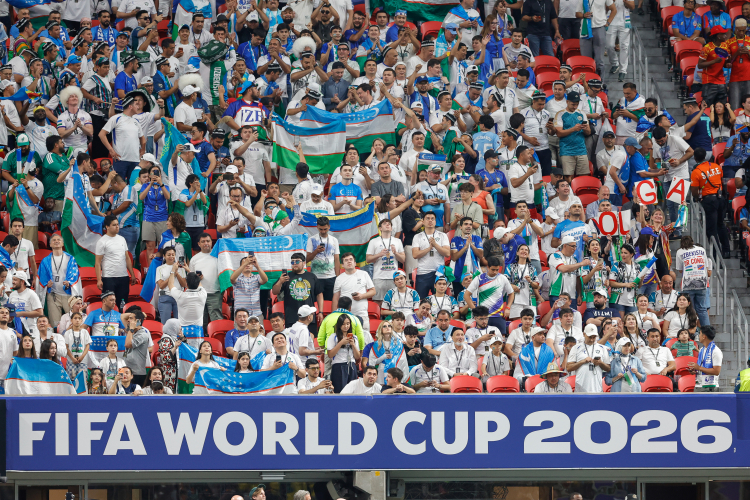
It brings to mind visitors for the World Cup. In contemplating it, it’s worth remembering the last time the U.S. hosted the World Cup in 1994. Not only was there no social media enabled by near-costless global communication on devices that were wholly unimaginable then (yes, wireless phones still elicited long stares in ’94), the rest of the world was so much poorer then. Figure that the Berlin Wall had just fallen less than five years prior to the iconic sporting event.
Which means the U.S. wasn’t inundated with foreigners clamoring for tickets, restaurants, drinks and hotel rooms. So relatively cheap were tickets to the matches then that yours truly attended the 1994 final at the Rose Bowl between Brazil and Italy.
The digression serves as a reminder that sometimes the best way to understand the genius of your country and its economy is through the eyes of those who don’t live in it. While pundits paint a dire picture of Americans suffering as the rich live high, people from outside the U.S. see something else entirely.
Of expanded means to travel and enjoy the finer things over thirty years after communism happily died around much of the world, they see that as their economic circumstances have gotten much better, those of the typical American have skyrocketed.
What’s important is that of course American living standards have soared. How else to explain the rising inequality?
Which means that in so many ways the typical American today lives like a king despite the fact that the typical American will never measure their wealth in eight, nine, or ten figures, let alone six or seven. The fruits of inequality.
Consider K-Shaped in this way. It’s not a bad thing. No doubt there are struggling Americans today, but the struggles are taking place amid remarkable abundance that wouldn’t be possible absent the productive genius of the very few.
