




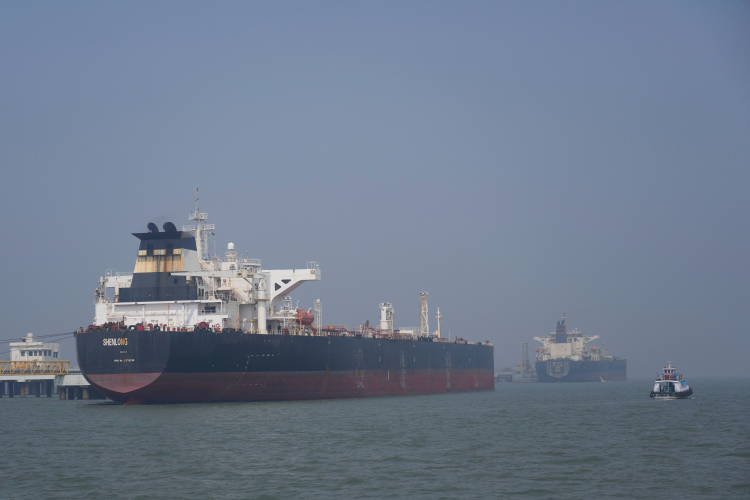
Bad policies almost always start with bad stories. Few economic narratives have been as persistent or as wrong as the idea that the United States remains dangerously dependent on oil.
Twice in recent years the nation has been warned that an oil shock would cripple the global economy. First, Russia’s 2022 invasion of Ukraine, and today the Strait of Hormuz closure have led to predictions of economic disaster. In both cases, the panic was loud, the economic damage was not.
The reason is simple: oil isn’t as important as it used to be.
Yes, petroleum remains an important commodity. Airlines need jet fuel. Trucks need diesel. Many industrial processes depend on petroleum products. But the broader economy has changed. Put plainly, when oil supplies tighten, the world now has more ways to quickly adjust.
That reality has major implications for U.S. energy, environmental, and foreign policy. It’s time to retire the outdated narrative of American oil dependence.
When the United States and Israel began strikes on Iran and Tehran responded by restricting traffic through the Strait of Hormuz, the reaction was predictable. Oil prices jumped. Analysts warned of a historic energy crisis. Fatih Birol of the International Energy Agency, called it the “largest disruption to the global oil market in history.” The IMF warnedthat “all roads lead to higher prices and slower growth.”
Other economists quickly joined in. Cable news regular Mark Zandi said in a March CNBC interview that “unless the hostilities are coming to an end now... recession is more than likely by the second half of the year.” Mohamed El-Erian was not far behind, arguing that a recession was highly likely if the Strait was not reopened by mid-June.
Politicians reached for the usual playbook: strategic reserve releases, gas-tax holidays, subsidies, windfall taxes, and other attempts to shield consumers from higher costs. The public absorbed the negative sentiment. Consumer confidence plunged to record lows in April and fell further in May.
Markets told a different story. After initially surging, oil prices quickly began falling back toward where they started — even without a major increase in global production and without meaningful use of emergency reserves. The same thing happened after Russia invaded Ukraine in 2022, when oil briefly spiked to before retreating.
This isn’t luck or government intervention. And it’s not an alternative supply coming online — that takes too long. The United States is the largest oil producer in the world, and its output was roughly the same at the start of the year as it was in June. It’s a sign of a changed global economy.
A truly indispensable commodity does not behave this way. When supply falls, prices explode and stay high because buyers have no alternative and can’t wait. That was closer to the 1970s reality, not today.


Over the past half century, U.S. crude oil consumption has barely grown, going from 17.5 million barrels per day in the 1970s to 20 million barrels per day today. Over the same period, the size of the overall U.S. economy has expanded by roughly 400%. We produce far more output with far less oil.
The same transformation is happening globally. Growth in oil demand has acutely lagged growth in economic output. The rise of China, India, and other developing economies has increased petroleum consumption, but nowhere near proportionally.
Technology deserves much of the credit. Modern engines are much more efficient. Hybrid and electric vehicles have reduced gasoline usage and created a new source of competition. Natural gas has displaced petroleum in many industrial uses. LNG technology has expanded global access to alternative fuels.
At the same time, the supply side has changed dramatically. New drilling technologies have unlocked enormous reserves outside the Middle East. The world is not running out of oil; if anything, producers increasingly worry about oversupply. During the pandemic era collapse in demand, oil prices briefly went negative — a reminder of how much the market had changed.
This context matters. A 75% increase in oil prices makes a frightening headline but it ignores the starting point. Adjusted for inflation, recent peak oil and gasoline prices were far below previous peaks. More importantly, Americans are much wealthier than they were during earlier energy shocks. Motor fuel now represents a historically small share of U.S. consumer spending. Higher prices at the pump are annoying, but annoyance is not the same thing as economic catastrophe.


This is where perception and reality diverge. In opinion polls, Americans routinely say gasoline prices create severe hardship. Consumer choices, however, suggest something different. Light trucks dominate new vehicle sales (the Ford F-150 has been the best-selling model for decades). Electric and hybrid adoption remains relatively modest.
The inflation story has also been exaggerated. Oil shocks can temporarily raise headline inflation but do not create sustained inflation. The price increases of the 1970s are often blamed on oil, but that story ignores that in the face of major pushback from the Fed in the 1970s, the Nixon administration devalued the dollar in which oil and other commodities are priced. They all spiked, as opposed to the "oil shock" narrative that prevails to this day. Similarly, the 2022 oil spike produced remarkably little passthrough into core inflation.
None of this means oil no longer matters. It does. But confusing “important” with “indispensable” leads to bad decisions. The danger of the oil-dependence myth is that it encourages policymakers to overreact — to subsidize, intervene, panic, and make geopolitical concessions based on a vulnerability that is significantly smaller than advertised.
There are plenty of economic problems worthy of concern. To name a few, the massive U.S. federal deficit, growing financial risks, and a political system increasingly incapable of serious policymaking. A temporary rise in oil prices should not top the list.
The lesson from recent energy shocks is clear: the world has changed. The oil market has changed. The American economy has changed. Our domestic and global policies should change with it.
