




Gross Domestic Product (GDP) is a fraud. Centrally planned, politicized consumption of precious wealth (government spending) adds to the number, while massive inflows of global wealth meant to profit from said country’s soaring productivity actually subtract from this most misleading of numbers. That U.S. GDP rose in 2008-2009 after GM and Chrysler were bailed out against the wishes of the pesky marketplace (what do markets know after all?) just adds to the overwhelming absurdity of the calculation.
Except that American Institute for Economic Research (AIER) research fellow Thomas Savidge believes otherwise, that Debt-to-GDP measures are “important,” and that fellow AIER colleague David Hebert gives debt-to-GDP “too little credit.” Hebert tells readers at Civitas that Savidge has convinced him of debt-to-GDP’s importance, but that the “difficulty of repaying” the federal debt makes “debt-to-revenue” that Hebert follows more closely the more relevant metric. Hmmm.
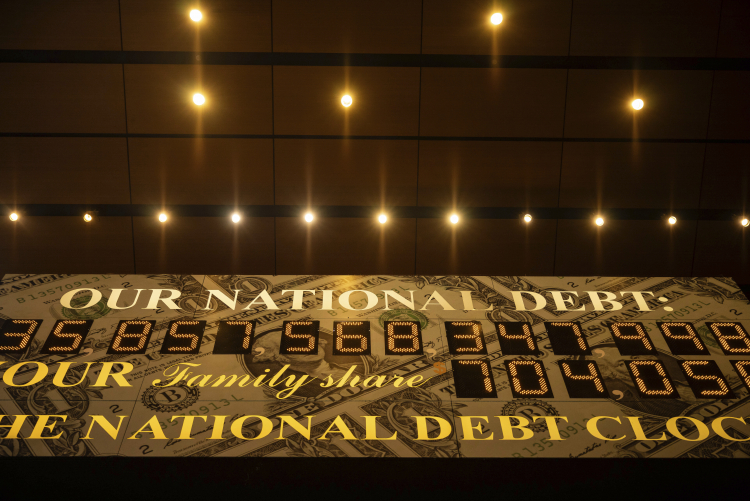
In Savidge’s case, how to measure a real number (national debt) in terms of a fraudulent one (GDP)? Of course, that’s why debt-to-GDP has never mattered to actual markets pricing reality. Considering the U.S. alone, Treasury yields roughly resemble what they did in 2007 (when total federal debt was a shade under $9 trillion) despite an addition of $30 trillion worth of debt since then.
Hebert writes once again of the “difficulty of repaying” the federal debt, thus his focus on debt-to-revenue, but in what market does “difficulty of repaying” take place alongside surges of borrowing? Hebert isn’t saying. But it seems the deepest markets in the world have never shared Hebert’s assessment. See Treasury yields again amid a tripling of the national debt since 2007.
Yet as Hebert routinely notes in his seeming rebuttal of Savidge’s rebuttal of his rebuttal, they mostly agree. For instance, they believe that to borrow is just “a tax on future citizens.” The latter is accepted wisdom among PhDs, but one guesses the pain of Vietnam was felt much more acutely by the people in the moment than those paying off debts accrued. Same with the borrowing that subsidized national lockdowns in 2020.
As has long been argued by a certain non-PhD, central planning of precious resources is the cruelest tax of all, and it’s felt right away precisely because central planning fails, always and everywhere. As for the debt, it’s the easy part as Treasury markets keep telling us. It seems market signals aren’t as popular a metric when they don’t reflect the punditry’s broad alarmism.
Hebert seeks peaceful arguments in Washington about the debt, given his belief that the U.S.’s “financial position might be better off” if official Washington “could learn to argue the way Tom and I just did.” It all sounds nice, but did Hebert and Savidge’s civil argument really solve anything?
In focusing on debt-to-revenue, Hebert has seemingly missed why it matters. See his observation that “The trillion dollars of national debt that took 205 years to accumulate now happens every seven months.” Well, yes. $1 trillion worth of debt in 1981 to $39 trillion today, though Treasury pays quite a bit less to borrow today. Get it? The bet here is that Hebert eventually will.
He writes that “Debt is serviced by income.” Yes, that’s true. And the debt is a symptom of a basic, screaming truth that federal tax revenues are but a pale imitation of what they will be in the future.
Which means Hebert should have just stuck to his original guns, and argued accordingly. Debt-to-GDP is powerfully bogus, and a focus on it will blind him and all economists to the market-driven causes of the national debt.
