




Two things happened in Washington last week that cannot both be right. On July 21, Treasury Secretary Scott Bessent said Chinese artificial-intelligence firms could face sanctions and a spot on the Commerce Department's Entity List if they steal American intellectual property. Open source, he wrote, is not open season on American IP. A day later, roughly 200 startups organized by the Little Tech Association, with Y Combinator among them, asked the White House to do the opposite: leave Chinese open-weight models alone, because a ban would gut the small firms that build on them.
When the Treasury and the founders of the next tech generation want opposite things, one side has misread the problem. On the economics, the founders have it right, and the case against a ban is a conservative one. It would let the government pick winners, raise costs on American builders, and fail on its own terms.
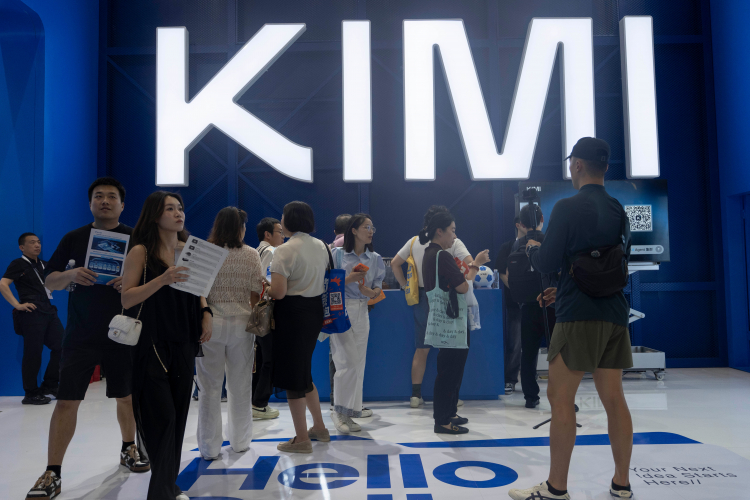
Start with the invoice, which is what actually moved the market. DeepSeek's flagship charges about $0.87 per million output tokens; Anthropic's comparable Claude Fable 5 runs near $50. Coinbase cut its AI spending nearly in half by running Chinese open models like Kimi and GLM in production. American developers noticed at scale. On OpenRouter, which routes traffic across dozens of models, Chinese systems have taken more than 30 percent of US-routed tokens every week since February, touching 46 percent. Lindy moved all its traffic to DeepSeek. Cursor built a coding agent on Moonshot's Kimi. DoorDash, Airbnb and Siemens are testing Chinese models in daily operations.
This is the reality a ban collides with, and it explains why the chip playbook will not transfer. Export controls on advanced semiconductors bite because chips are physical, with chokepoints: you cannot build a leading-edge processor without machines from one Dutch company and one Taiwanese foundry. A model is a file. When Moonshot posted Kimi K3 on July 16, the largest open-weight model yet released, it was on servers worldwide within days. There is no export control for something already everywhere. A blanket ban would not keep Kimi from any foreign rival. It would only make it illegal for Americans to use what everyone else uses freely, and a VPN would defeat it anyway. Little wonder that First Amendment lawyers see problems in banning published model weights, and that the most viable option left in Congress has narrowed to federal procurement rules.
The intellectual-property complaint deserves a straight answer, because part of it is real. The White House accused Moonshot of distilling Anthropic's Fable model and running the job on restricted Nvidia chips routed through Thailand. If that is true, it is theft, and the remedy is precise: prosecute the firm, enforce the terms of service the distillation broke, close the smuggling route, and put the named offender on the Entity List. None of that requires banning a category of software that hundreds of law-abiding American companies now depend on.
The security worry runs deeper than price, and it should be met, not waved away. A Booz Allen study found that three of four Chinese code models produced more vulnerable code when the user was flagged as a US government contractor, and all four refused politically sensitive prompts. That is a real argument against putting these models on sensitive or government systems. It is an argument for workload segregation, self-hosting with audits, and independent code review. It is not an argument for a wall that also blocks the startup using Kimi to sort invoices.
Notice who is now making the market case. The Little Tech letter came from startups. Within days, a broader one signed by Nvidia, Mistral and OpenAI urged Washington against broad open-weight restrictions. Even Jensen Huang, who has every reason to want American models to win, has defended Chinese open systems in public. The cooperation some in Washington imagine may not be on offer from the other side, since Beijing is weighing its own limits on foreign access to China's best models. This is a competition, not a negotiation. The way to win one in a general-purpose technology is to build faster and price sharper, not to forbid your own engineers from using the cheapest tools on the market.
The administration has not announced a policy, and David Sacks, its AI point man, is still weighing options. That is the moment to get the design right. A blanket ban on Chinese open-weight models would raise costs for American startups, hand a captive market to two or three large labs, and leave the models running everywhere else on earth. It would punish American users in the name of hurting Chinese firms, and it would fail at the second while succeeding at the first.
Washington's real choice is not security against openness. It is whether to compete by building better or by trying to make everyone else slower. For the country still in front, the second strategy has never once worked.
