




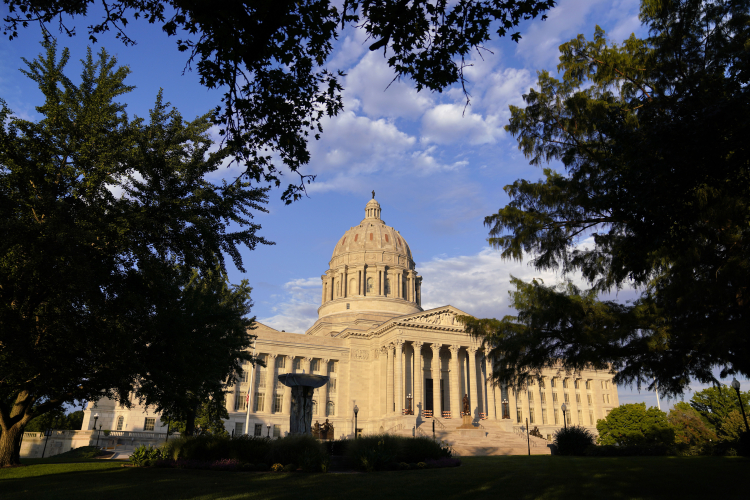
Early voters in Missouri are currently flocking to the polls to vote on four proposed constitutional amendments ahead of the August 4 primary election. Amendment 5 on the ballot is a plan to eliminate its income tax—a measure that, if passed, will boost local and the state’s economies for the betterment of Missourians.
The road to Amendment 5 is paved with institutional backing. Governor Mike Kehoe announced this measure in his January 2026 State of the State address: a plan to phase out the state’s income tax, currently set at 2-5%, over five years. Since income taxes make up 65% of total state revenue, the gaps would be offset with a heightened sales tax. The Missouri House crafted and passed the joint resolution in March, with Kehoe placing Amendment 5 on the August 4 primary ballot. Its presence has elicited significant pushback from critics, including a failed lawsuit to strike the measure.
Amendment 5 is a golden opportunity for Missouri to grow small businesses and let residents make a living. Bishop Davidson, a Missouri House Representative, told National Review that “[t]he average Missourian stands to benefit $2704 to $2872.” The White House Council of Economic Advisers’ January 2026 report found that eliminating state income taxes raises average state GDP by about 1-1.6% and increases average wages by about $4,000. They also saw 16 to 19% more startup activity in states without income taxes. As 81% of all new jobs in the Show Me State came from startups from 2019 to 2023, this would supercharge job growth and allow more Missourians to rake in the savings.
Booming industries at home mean Missouri can compete with other low- or no-income-tax states, improving its attractiveness to outside workers and investment. Florida and Texas, which punted their income taxes long ago, saw hundreds of thousands of Americans move in in 2025. The talent influx helped CNBC rank Texas the second-best state economy in 2026, with other income-tax-free states like Tennessee setting records for new business filings. Most recently, Mississippi, which implemented a gradual income tax repeal last year, saw a historic $21 billion in capital investment partly due to this new policy.
Missouri stands only to gain from Amendment 5. The Missouri Economic Research and Information Center found that, from January 2024 to 2025, the Cave State stagnated in producing nonfarm payroll jobs. While its population grew 0.43% from 2024 to 2025, newcomers offset a slight natural decline where native deaths and births were almost even. Its state economy isn’t collapsing, but it faces enough internal plateaus and competitive pressure from the surrounding region to warrant a boost. Economic activity can create and sustain momentum, with Amendment 5 being a long-term play to optimize their tax code.
Modernizing the tax code is equally important. In spite of the state still taxing earnings directly, Kansas City and St. Louis, home to 55% of the state’s population, levy a 1% earnings tax. Most of the state deals with layered taxes on earned income, demonstrating the measurable burden on income. Missourians shouldn’t have to make at least $139,000 to take home $100,000 after taxes; they should keep what they earn with legislation that prioritizes and aligns with their financial interests.
Critics of Amendment 5 are concerned that no detailed implementation plan exists. Policy research organizations, in filling in supposed knowledge gaps, suggest that the middle-class and seniors must foot the bill under the new regime. Both criticisms mislead the public.
First, Amendment 5 isn’t a blank check but ties income-tax reductions to state revenue “growth triggers,” similar to Mississippi’s law. The state can raise sales taxes only if the revenue is used to cut income taxes by the same amount. Amendment 5 also prevents local municipalities from reducing funding to public schools, so parent groups protesting the measure can rest easy. The exact triggers and sales-tax changes are the lone variables, providing legislators with flexibility, time, and debate on formalizing these components.
Second, Amendment 5 isn’t regressive or an immediate tax swap. Lawmakers can exempt taxes on essentials that everyday Missourians depend on, like prescription drugs and social services, upon the Amendment’s passage. Additionally, they could shift the burden onto higher-end items, such as luxury vehicles and jewelry, making the elite pay proportionally more than the average person. If Missouri's tax structure is truly upside-down, Amendment 5 can correct course and deliver sweeping, populist relief for working families and seniors.
This August, Missourians have the chance to unlock economic prosperity, fiscal reform, and generational transformation for their state. Amendment 5 is that chance, and those looking to build a future in the state ought to consider supporting it.
