




When they were young, I used to give my daughters little bags of chips. Turns out, my oldest would take some of her sisters’ stash. This coincided with chip-makers putting fewer in each bag. Shrinkflation.
When I cut the number of bags I handed out, she would actually demand more from the other girls.
If this sounds too unfair to be true, that’s because it is. I made it up. The scenario is analogous however, to those playing out in cities across the country this municipal budgeting season.
Faced with deficits in the hundreds of millions of dollars, cities are responding with a mix of raising taxes, fee hikes and cuts in spending. Naturally, there has been public opposition to raising tax rates, and even some resistance from elected governing bodies.
Here in San Antonio, the Express-News editorial board chimed in, recommending a “modest tax hike (and) spending cuts.” It’s “common sense” and “rational” to look at “both sides of the budget scale.”
Interesting choice of words.
Since the pandemic lockdowns, our population has grown 9%. The increase in the city’s property tax take has roughly tracked the 25-30% overall inflation rate. The City’s budget, including payroll growth exceeding that of the population, has grown over 40%.
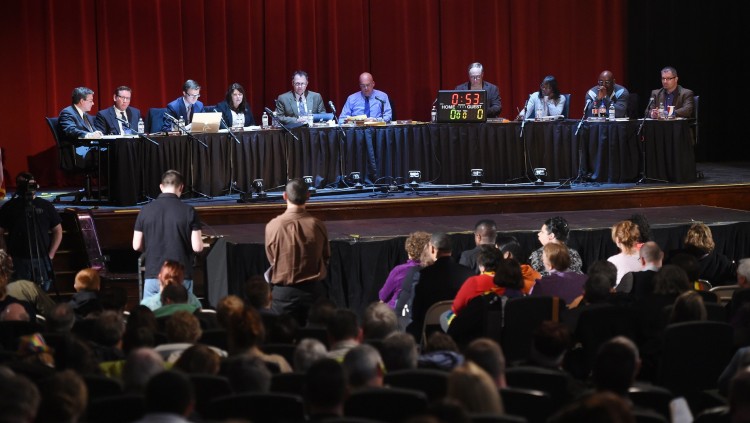
Do those figures, taken together, sound “rational”? Much of what came from the dais during the last budget meeting in June was also puzzling.
An eastside councilman started by posing a thoughtful question regarding policing. Do we believe someone isn’t going to “retaliate at someone for shooting their friend or relative because the city hired 60 more officers?”
By the same token, do we believe the “programs and social services” at risk of losing funding would prevent a crime like that?
Moreover, the new parent he sees in the mirror might object to his claim that the “root causes of crime can only be addressed” with government spending. His mere presence in his child’s life arguably does a better job.
Earlier, an uptown member of council expressed a desire to shield the “minor home repair” program. It can “keep people in their homes” and prevent “them from being unhoused.” A laudable goal.
Are ever-growing property tax bills not a similar threat?
Later, the city manager suggested that some expenses could be moved to capital. As Mayor Gina Ortiz Jones astutely pointed out, that’s basically putting them on the city’s credit card.
We here in San Antonio have the ignominious distinction of being the most indebted big city in Texas, by a lot. At more than twice the national average, this liability is borne by citizens of the poorest big city in the Lone Star State, and in the U.S.
When the FY27 budget for New York City was agreed to in June, Mayor Zohran Mamdani proclaimed “we balanced the budget without asking working New Yorkers to shoulder the burden.” Do his three socialist counterparts here on our council share that goal?
And since when do politicians ‘ask’ to tax? But I digress.
The correlation may not be apparent, but municipal debt is generally financed by taxes: here, by property taxes. The conventional narrative is that we’re one of the fastest growing cities in the country. Surrounding counties, however, are growing 15%-4X faster.
If transplants to the region continue settling beyond city limits, joined by San Antonians with the means to leave and do the same, everyone else will be left with the bill.
Additionally, our council is also considering raising the debt-financing portion of the property tax rate for the sole purpose of borrowing more.
Does any of this sound like “common sense” yet?
In fairness, this could all lend itself to a southeast side councilwoman’s assertion that “a city budget … is not a … household (or a) business budget.” The eastside councilman seemed to concur when he said “we will not get better services with lesser resources.”
Are these tacit admissions that (city) government is an inherently inferior operation? Sure, it’s much bigger than even the biggest household, but that excuse fritters away in comparison to large private businesses.
Unlike them, a government will never go out of business. Why? Because as politicians obviously know, they can keep it afloat by simply imposing (more) taxes.
Perhaps this is why many politicians barely mention “the taxpayer.” Maybe it relieves them of the guilt of taking more from them if they don’t explicitly acknowledge these involuntary benefactors? Rather, these conscripted financiers exist as some abstract other.
Maybe that’s what makes it easy to force them to fund 21X more of public transportation than riders do. How about “modestly” raising fares, redirecting a portion of the sales tax devoted to public transportation to the general fund, and actually cut the property tax rate?
It would be more respectable than circling “all the vendors … that line-up” along roadways like vultures, threatening them with increased permit fees, as the southeast member of council implied.
The councilwoman from the near-west side put a bow on this June discussion when she added that “austerity is not a realistic budget plan.” But austerity isn’t just cutting spending; by definition, it includes raising taxes.
It’s disappointing how many in the political class fail to grasp these realities.
It’s bad enough that municipal budgets got fattened-up when Uncle Sam was showering dollars on U.S. cities. Regardless of the federal government’s penchant for regularly overspending, those lockdown flourishes were not going to last indefinitely.
But why did so few, if any, foresee the inevitable plateauing of property values?
They were content, even opportunistic, to spend the spike in tax revenue. The homes I’ve owned in the Alamo City experienced anywhere from a 28% - 70% rise in values over this time. But those were effectively inflationary, unrealized ‘gains’, to use that term loosely.
Once Washington D.C. started to correct policy, poof!
After all is said and done, it seems those bags of chips I gave to my daughters were less illusory than any “common sense” and “rational”ity emanating from political leadership and the establishment.
