




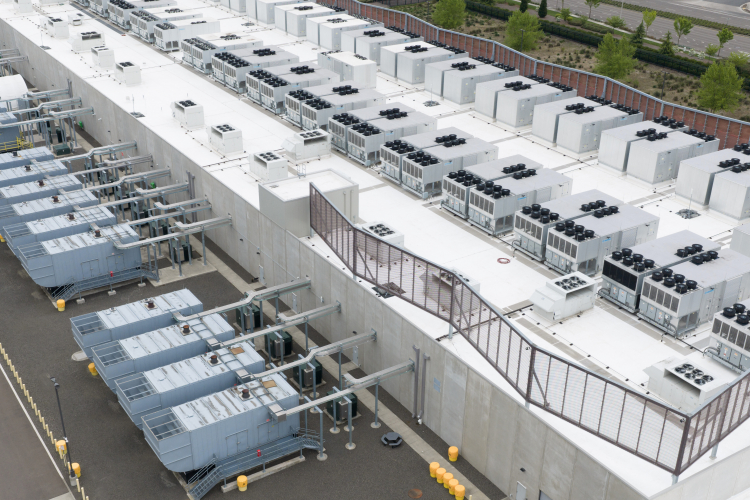
This week, Wall Street's patience finally snapped. Following a disappointing round of earnings from several technology giants, investors abruptly shifted their attention from artificial-intelligence dreams to a far more mundane question: cash flow. For several years, markets largely treated AI infrastructure spending as self-evidently virtuous. Suddenly, they are beginning to ask whether the demand justifies the cost.
In agricultural economics, this moment has a name.
The "hog cycle" describes a predictable, self-defeating rhythm. High prices encourage producers to expand production. Because biological and production lags delay new supply, everyone expands at the same time. By the time that supply finally arrives, demand has cooled, prices collapse, producers liquidate, and the cycle starts all over again.
Substitute server farms, power plants, substations, transmission lines, and multi-billion-dollar data centers for livestock, and you have the basic economic blueprint of the current artificial-intelligence buildout.
The technology may be new.
The cycle is not.
1. The Prisoner's Dilemma and Capital Overreach
For the past several years, the world's largest technology firms have been trapped in a classic prisoner's dilemma. No executive wants to be remembered as the person who underinvested in the next transformative technology. If AI becomes as important as its advocates claim, failing to build sufficient infrastructure today could mean surrendering entire markets tomorrow.
Consequently, mega-cap firms have entered an unprecedented arms race for data centers, GPUs, transmission access, water rights, and specialized industrial equipment. Viewed individually, each investment decision appears rational. Viewed collectively, the behavior begins to resemble a speculative stampede.
The frenzy is reinforced by a circular financial structure. Major technology companies invest billions into AI startups and model developers, which in turn spend significant portions of that capital purchasing cloud services and computational capacity from the same technology giants that funded them. The transactions are economically real, but they also create a feedback loop that can make demand appear more durable than it actually is, encouraging ever-larger commitments of physical capital.
The assumption underlying these commitments is simple: future demand will justify today's spending. Every cyclical overexpansion in history has rested on a similar assumption.
2. The Value Gap, Enterprise Purgatory, and the Seinfeld Paradox
The central question is not whether AI can perform useful tasks—it clearly can. The question is whether the economic value generated by those tasks is sufficient to justify the scale of infrastructure currently being built.
There are growing reasons to doubt that assumption. A widely discussed MIT study reported that only a small minority of organizations were generating measurable financial results from generative-AI initiatives at scale. The overwhelming majority remained stuck in pilot programs, limited deployments, or experimental projects that failed to progress into transformative business systems.
Even in heavy industry, the blind rush to swap human judgment for automated systems has hit a wall. When Ford attempted to bypass veteran manufacturing oversight by deploying AI-driven quality-control systems, the strategy exposed the difficulty of translating decades of tacit engineering knowledge into software. The company ultimately renewed its emphasis on experienced engineering oversight and veteran expertise.
Experience and institutional memory are complements to automation, not substitutes.
That reality points toward a deeper contradiction at the center of the current boom. What systems analysts might recognize as an infinite refinement loop, the broader economy might call a technological version of the Seinfeld Paradox. Rather than defining a core productive purpose, enterprise AI often functions as a high-speed accelerator for administrative activity. It excels at mapping the negative space of a business—generating endless variations of what an organization does not want—without ever converging on what the organization is actually trying to accomplish.
The result can be a self-reinforcing loop in which reports generate summaries, summaries generate recommendations, recommendations generate presentations, and presentations generate more reports. The system becomes increasingly efficient at processing ambiguity without necessarily moving closer to a decision.
The danger is not that AI produces nothing useful. The danger is that it produces far more than organizations can meaningfully consume.
A factory that overproduces automobiles quickly discovers its mistake because unsold inventory accumulates in plain sight. A large language model faces no such constraint. It can generate policy drafts nobody will implement, reports nobody will read, analyses nobody requested, and recommendations nobody intends to follow. In such an environment, high-speed activity can easily masquerade as productivity.
3. The Utility Backdoor and the Ratepayer Trap
While technology firms pursue AI growth, utilities face a different incentive structure. Data-center developers have flooded regional grid operators and utilities with forecasts of enormous future electricity demand. Utilities, operating within regulated rate-of-return frameworks, naturally react by proposing billions of dollars in new infrastructure investments.
The problem is that physical infrastructure operates on timelines measured in years rather than quarters. A PowerPoint presentation can project demand instantly. A substation cannot. A transmission line cannot. A transformer factory cannot.
By the time many of these projects are completed, the market assumptions that justified them may no longer exist. What appears to be prudent planning during the boom can become expensive overcapacity after the boom. The physical world moves too slowly to correct itself before the market changes its mind.
4. Ground-Level Realities: The Farmer's Exit Strategy
At the local level, the boom has created a strange set of winners. Developers hunting for transmission access and electrical capacity increasingly target rural land located near substations and major transmission corridors. In many cases, they are willing to pay prices that traditional agricultural economics could never support.
This creates an uncomfortable paradox. Local opposition groups often view these projects as existential threats to rural communities. Yet many of the landowners involved see something entirely different: a rare opportunity to eliminate debt, secure retirement, or escape the financial pressures of modern farming. When institutional investors arrive offering life-changing sums for otherwise low-margin acreage, zoning battles frequently become little more than an argument over timing.
The irony is that some of the biggest beneficiaries of the AI boom are people who have little interest in artificial intelligence itself. Farmers can sell, landowners can sell, and families can cash out. The long-term risk remains with those financing and developing projects whose economics depend on demand forecasts extending decades into the future.
5. The High-Tech Hot Potato
Wall Street has always excelled at turning speculation into a product. The challenge is that every speculative boom eventually becomes a game of hot potato.
A farmer sells land to a developer. The developer sells the project to an infrastructure fund. The infrastructure fund refinances through a lender. The lender distributes exposure to investors. Utilities obtain approval for long-lived assets based on projected demand. At every stage, participants assume they can pass the potato before the music stops.
The problem is that cyclical overexpansions end when there are no longer enough buyers willing to accept the next handoff. Suddenly the conversation shifts from exciting forecasts to cash flows. Markets stop asking how large demand might become and start asking how much demand actually exists.
That is when asset prices begin discovering reality.
The ultimate hot potato may not even land with Silicon Valley. Technology firms can write down investments. Venture-capital firms can raise new funds. Private-equity sponsors can restructure troubled assets. Contractors have already been paid. Equipment manufacturers have already shipped their products. Farmers have already deposited the check.
The risk keeps moving until the music stops. At that point, somebody discovers they paid boom-time prices for post-boom cash flows.
6. Who Holds the Bag?
Popular imagination treats cyclical overexpansions as sudden explosions. History suggests something different. Most infrastructure overexpansions end not with disappearing assets but with changing ownership.
The railroads built during nineteenth-century manias continued carrying freight after investors were wiped out. The fiber-optic networks constructed during the telecom boom remained in the ground long after many of the companies that built them disappeared. Bankruptcy rarely removes infrastructure from the economy; it merely determines who absorbs the losses.
The same dynamic is likely to characterize the AI correction. Data centers will not vanish. Transmission lines will not be dismantled. Substations will not be hauled away for scrap. The physical assets will remain useful to someone.
The real question is who ultimately pays for the overbuild. Some losses may be transferred to distressed investors purchasing assets at fractions of their original cost. Some may ultimately find their way into regulated utility rate bases, where costs are spread across residential and commercial customers over decades.
The physical world keeps the receipt.
7. The History of Getting Ahead of Demand
The defining feature of every hog cycle is not that demand disappears. It is that producers collectively build for demand that never fully arrives.
That pattern has appeared repeatedly throughout modern history. The railway manias transformed transportation while bankrupting investors who financed excessive construction. The electrification boom produced a technology that became indispensable while destroying ventures that overestimated near-term demand. The automobile revolution changed the world, yet hundreds of manufacturers disappeared. Radio transformed communications while speculative radio stocks imploded.
The telecommunications boom of the 1990s buried vast quantities of fiber-optic cable beneath cities and oceans. The internet arrived exactly as predicted; what failed were the assumptions about how quickly demand would fill all that capacity. Dot-com investors correctly predicted the digital future but catastrophically mispriced its timing and profitability. The shale revolution transformed global energy markets while leaving behind a graveyard of bankrupt producers.
The lesson is remarkably consistent.
The technology survives. The infrastructure survives. The capital structure frequently does not.
Conclusion: Another High-Tech Hog Cycle
The most common rebuttal to concerns about an AI capacity overshoot misses the point entirely.
Pointing out that AI is useful does not prove there is no capacity overshoot.
Railroads, electricity, automobiles, telecommunications, and the internet were all profoundly useful. History's largest cyclical overexpansions were rarely built around technologies that failed; they were built around technologies that succeeded so spectacularly that investors convinced themselves demand had no practical limits.
Because this boom is tied to physical infrastructure rather than purely financial assets, the correction may unfold more slowly than previous manias. By the time investors discover the difference between projected demand and realized cash flow, most of the spending will already have occurred.
The tragedy of every hog cycle is that no individual participant intends to create a glut. Each actor responds rationally to the incentives in front of them. The oversupply emerges collectively. No technology company intends to create excess capacity. No utility intends to overbuild. No lender intends to finance a stranded asset. Yet collectively they may be constructing far more infrastructure than the eventual economics can support.
That is how hog cycles work. That is how cyclical overexpansions work.
History suggests that when enough participants become convinced demand can only move in one direction, the correction is usually not a question of if. It is a question of when.
The names change. The technology changes. The PowerPoint slides become more sophisticated.
The cycle does not.
