




America's debate over water is becoming a familiar story, unfortunately, its a horror story. Competing interests take legitimate concerns and turn them into opposing camps with divisive words and behaviors. Data centers are portrayed as reckless water hogs. Agriculture is sometimes treated as an outdated industry unwilling to adapt. Industrial users are cast as threats to communities and the environment. This all happens as ordinary consumers are told their access to affordable water may somehow be incompatible with economic growth.
Water is essential to life, but it is also essential to modern civilization. We need it for drinking, sanitation and healthy communities. We need it to grow food. We need it for energy production, manufacturing and other industries that provide jobs and generate economic opportunity. We increasingly need it to support the infrastructure behind the technologies that power our digital economy, (yes, including data centers).
The choices we make cannot be between water for drinking, water for agriculture and water for energy and technology. We need all and more. The challenge is determining how to manage a finite resource responsibly while recognizing that different communities have different supplies, demands, costs and environmental circumstances. That requires something increasingly rare in public policy debates - honesty.
There is a tendency among advocates on both sides to exaggerate or simplify water use in ways that make the opposing side appear irresponsible. Data center opponents can point to the enormous amount of water that some facilities may consume without acknowledging differences in cooling technology, local water supplies, facility design and whether non-potable water is being used. Industry advocates can make the opposite mistake by minimizing legitimate concerns about water availability or the cumulative impact of development in communities where supplies are already constrained.
Water is fundamentally a supply and demand issue. Where water is abundant and relatively inexpensive, businesses that require water may have a compelling reason to locate there. Where water is scarce, expensive or subject to significant restrictions, the economics change. A company considering a major investment has every incentive to understand those realities before putting capital at risk.
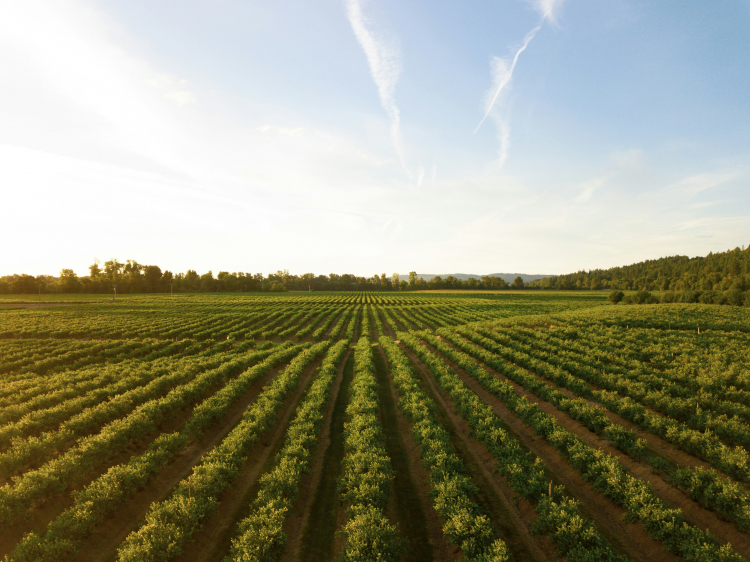
The same principle applies to agriculture. Farmers do not have unlimited water. They depend on reliable supplies to produce the food that feeds communities and supports a massive part of the American economy. Many farmers have spent decades investing in irrigation efficiency, conservation technology and better management practices because every drop has economic value to them. The conversation should recognize that agriculture and technology are not inherently enemies.
Technology itself can also be part of the solution. Advances in cooling systems, water recycling, facility design and monitoring can help businesses reduce their water footprint. Direct-to-Chip (DTC) cooling is one example of how new technology can reduce the amount of water required to cool data center equipment. These kinds of innovations should be part of the conversation when communities evaluate the actual water impact of a proposed facility.
A community facing a serious water shortage has a legitimate interest in asking hard questions about whether a new industrial facility is appropriate. It should examine the source of the water, the amount required, the effect on existing users, the reliability of the supply and the long-term implications of additional growth. Fair questions should be answered with facts instead of fear.
If a proposed data center uses a particular amount of water, the public deserves to know how that figure compares with other major users in the same region. If a facility can operate with reclaimed water rather than potable water, that fact matters. If a new technology can substantially reduce consumption, that matters too. If a community has abundant water supplies and the facility will create significant investment and employment, it all deserves honest consideration.
The goal for any interest should not be to manufacture a villain. It should be to understand the tradeoffs.
This approach requires stakeholders to sit at the same table. They may disagree about priorities, but they share an interest in maintaining a reliable water supply and a healthy local economy.
These are difficult conversations, but they are far more productive than suggesting that one legitimate use of water must defeat another. Communities should be able to demand responsible development, but categorical opposition to data centers can leave them as a Digital Desert while investment, jobs and technological infrastructure move elsewhere.
The answer is not to choose between the water we drink, the food we grow and the energy and technology that power our lives. The answer is to manage our water resources wisely enough to support all three.
