




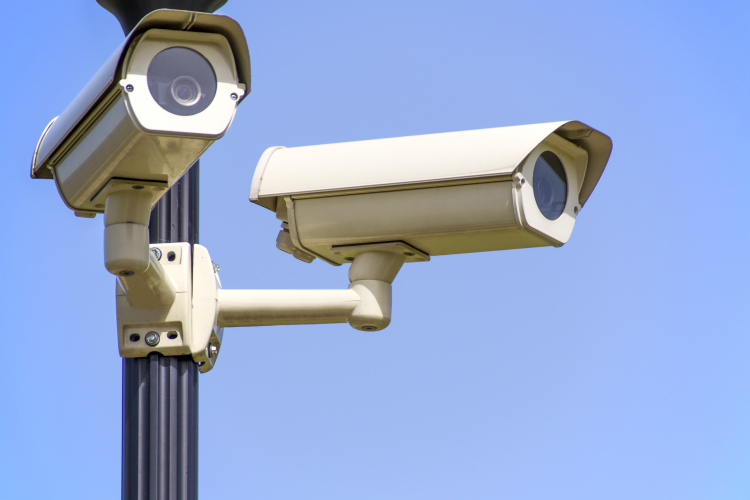
Governmental surveillance cameras have been popping up here, there and everywhere. If you don’t see them on the street corners of your neighborhood, you haven’t been looking closely enough.
Civil libertarians are aghast. This intrusion violates the Fourth Amendment to the Constitution, which prevents such intrusions, without benefit of any search warrants.
On the other hand, they clearly reduce crime. Criminals are shy folk. They hate to have their pictures, or those of their license plates, being bruited about. The advent of cameras all over the place will put them off their feed.
So, here, we have two obvious desiderata, in conflict with one another. On the one hand, all decent citizens cannot help but wish for a reduction in muggings, murders, rapes and theft. On the other hand, it is a rare person who does not value at least some modicum of privacy. What to do?
Compromise!
How would this work? One solution would be to place these cameras only in high crime areas. That will cock a snook at unlawful behavior where it is most rampant. There are two problems with this. Offenders are stupid, but they are not that stupid. When they hear of this new arrangement, they will take their “business” elsewhere. Instead of preying on people in their usual haunts, they will focus on previous low crime areas. So, that won’t really work.
Then, too, it is only a very small minority of folk in the high crime areas who habitually break the law. Most are entirely peaceful. On the other hand, they have the most to gain from a reduction in crime, and, thus, may be expected to weigh the tradeoff in a different manner than others.
How about this modest proposal? Post these cameras everywhere, without exception, which seems to be the present policy. But, then, turn them on in proportion to the crime rate.
How would this function? Let us divide areas based upon crime rates into seven categories. A 7 is given to the places with the most lawbreaking, a 3 or 4 to those territories with a moderate among of such offenses, and a 1 given to the most law-abiding domains. Then, the 7s have their cameras turned on every day of the week, the 3s and 4s benefit from this only three or four days per week, and the 1s do so, for only a single day, weekly.
Needless to say, only the 7s have no changes as regards the particular day of the week; they are turned on every day without exception. It varies only for the other six categories.
Take the 3s as an example. On one week, the camaras are turned on Monday, Wednesday and Friday. On the nest week, Tuesday, Thursday and Saturday. Then, in a completely random manner, Sunday, Monday, and let’s say, Friday.
This will not fully obviate the danger of muggers seeking greener pastures in low crime neighborhoods, but, it will at least ameliorate this occurrence somewhat. The criminal will face a one day in seven chance of being apprehended.
That is the problem will all compromises: they do not fully satisfy either goal. With this one, we will have some privacy, and some crime reduction, but not all of each.
Here is one more consideration. When the police are actually chasing someone, then and only then are all cameras turned back on, despite which day of the week occurs.
This proposal is also predicated upon how much trust can be placed in the government. With all cameras in operational, the temptation to keep them rolling twenty four seven will not be inconsiderate.
Consider yet another complication. The police do not merely arrest criminals who prey on actual victims. They also corral victimless criminals: people only “guilty” of capitalist acts between consenting adults. For example, concerning pornography, prostitution, gambling, drugs, etc. Decent people do not want to see the police better enabled to arrest such innocent folk. To the extent that this occurs, all government cameras should be banned.
Here is one more consideration. If all the streets were privatized, as they now are in numerous large-scale condominiums and homeowners’ associations, there would be no need for any public policy regarding cameras. Each group would decide this issue for themselves, as they now do concerning the external color of the homes, the type of fences allowed, etc.
A compromise should be the order of the day. In that way, we can part of a loaf in privacy, part of a loaf in terms of crime reduction.
