




On September 18th, President Trump signed a law designed to hurt Russia and Iran by making it harder for them to sell their oil and gas. By cutting off their exports, the thinking goes, Russia and Iran will become poorer and have a harder time continuing their respective war efforts.
Then the president proposed doing exactly the same thing to the United States - specifically by restricting the exportation of diesel as a ploy to counter rising fuel prices.
“I’ve said let’s not send out the diesel,” Mr. Trump told reporters. Rep. Tim Burchett, a Tennessee Republican, has already written the idea into two bills. One bill would ban diesel exports outright through January 2027 and the other would initiate a restrictions trigger whenever the national average reaches $5 a gallon, keeping the ban in place until prices fall to $4.50 or less for 30 straight days. Senator Chuck Grassley of Iowa and Louisiana’s governor, Jeff Landry, are both supportive, and Politico has reported that the administration is preparing a 90-day version, possibly by invoking unnamed “emergency” powers to bypass Congress.
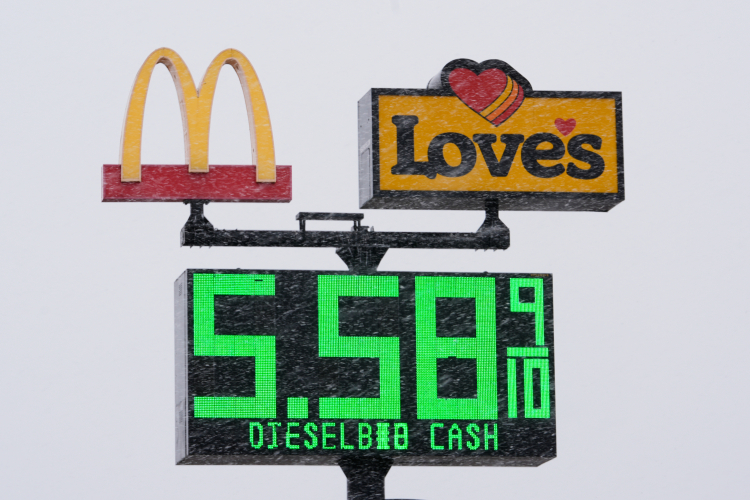
The impetus behind all of this is the on-again, off-again shutdown of the Strait of Hormuz for the past six months. Diesel has hit a record $6.53 per gallon, up from about $3.50 in January. Diesel is what drives the trucks, tractors, and trains that ship everything else, so when diesel gets more expensive, everything else in America carries with it a hidden fuel surcharge.
Unfortunately, economics doesn’t care about intentions or nationality. If blocking energy sales through sanctions makes Russians and Iranians poorer, banning diesel exports will make Americans poorer, too.
This is not the first time Americans have tried to lower the price of fuel through gimmicks. Social media is replete with examples of National Don’t Buy Gas Day schemes, where consumers try to unite to not buy gas on a certain day. The thinking goes that Big Oil will feel the pinch and “learn their lesson.” But what it accomplishes instead is convincing people to buy their gas the day before or the day after, nullifying any lesson that is supposed to be taught.
A diesel export ban is the exact same stunt flipped around. Instead of saying “don’t buy gas,” the rallying cry is “don’t sell gas.” Instead of coming from social media, it comes from the White House.
The similarities become apparent upon closer examination. Start with geography. Diesel headed overseas isn’t sitting in the tank at your local truck stop. It’s in a storage container near the ports. Getting that diesel to a pump in Michigan or Iowa will take time and money.
But the bigger problem is what a ban does to the people who make diesel.
Suppose that, in an effort to lower the price of cars in Michigan, Lansing bureaucrats told Ford that they were only allowed to sell cars in Michigan. Would Ford start building more cars? Hardly. Factories would shut down and workers would get laid off because Ford’s customer base just shrunk dramatically.
The same is true of oil refiners. Mr. Burchett complains that diesel margins have jumped from $15 per barrel to roughly $117. He calls that “gouging.” But what he neglects to mention is what astronomical profits signal to the rest of the sector: now is the time to increase production. During a genuine shortage, that’s exactly what we want oil producers to do.
An export ban would dampen that signal. By restricting diesel within the domestic market, the federal government floods it. Refiners would respond by either making less or by storing what they have and simply waiting out the ban. Some voices in the administration appear to recognize this reality. As Energy Secretary Chris Wright stated last week, "If you can't export the diesel that comes out of our refineries, you run out of places to store it, and you have to reduce U.S. refining, which would put upward pressure on gasoline prices and jet fuel prices.”
Regrettably, we’ve tried this experiment before. Senator Grassley points to the 1970s, when Washington restrained exports of soybeans to lower domestic prices. While it did have the desired effect of lowering domestic prices for a brief period, it also had the effect of inspiring Brazil to develop their own soybean industry. Last year, China exploited this to harm American farmers during the US-China trade war by halting soybean purchases and pivoting to Brazil. A three-month export restriction in 1973 bought a few weeks of mild relief for U.S. farmers, but handed China a strategic advantage in trade negotiations a half-century later.
So why is an already-failed idea gaining ground again? With midterm elections coming up, people across the country are feeling the squeeze at the pump and in their wallets. A ban on exporting diesel might bring prices down for a few weeks, but the harm will come further down the road. For officials seeking (re)election, that harm won’t come until after election day.
The reality is much simpler. If we want cheaper diesel, then we need to be producing more diesel. Everything else is just theater. High prices certainly hurt our wallets, but they also reward refiners for operating their refineries at full capacity and encourage all of us to use a little bit less until the Strait reopens.
We sanction Russia and Iran because we want their economies to hurt. It’s difficult to see how using those same tools against ourselves will accomplish anything different.
