




Republicans and Democrats both love to campaign against high prescription drug prices. They just use different words to describe how they’ll subvert markets and fix prices at a level their voters will appreciate. President Donald Trump’s version of this is the Most Favored Nation (MFN) policy, which benchmarks drug prices against the lowest net prices paid in other countries, while Senator Bernie Sanders has proposed pegging prices against the median price across five countries.
That instinct isn't crazy, at least for brand-name drugs. Americans pay more than 4.22 times as much as people in other countries for branded medications before rebates. But that statistic hides a bigger one: for the generics that make up roughly 90 percent of prescriptions filled in the U.S., America is the world's leading bargain hunter, paying just 67 percent of what patients elsewhere pay for the same pills.
But the major policy question at hand for America is: what can be done to help draw down the prices paid for those brand-name drugs, and are price-setting schemes really the solution? America has run this experiment before.
Avoiding the Nixon Experiment
In 1971, Richard Nixon froze wages and prices across the entire economy, pharmaceuticals included, to fight inflation. It produced the textbook case against price controls: ranchers stopped shipping cattle, farmers drowned chickens rather than sell at a loss, and shelves emptied as the controls dragged on. Still, Nixon’s move polled at 75 percent support with voters, which isn’t surprising. People get frustrated with the economy and look to politicians to channel that frustration.
Nobel Prize-winning economist Milton Friedman warned the freeze would end in “utter failure and the emergence into the open of the suppressed inflation.” He was right, and after the freeze didn’t improve the economy, Nixon’s aides backtracked. Thirteen years later, Congress tried the opposite approach with the Hatch-Waxman Act of 1984 — which didn't set a single price for drugs.
Instead, it made it faster and thus cheaper for generic manufacturers to enter the market once a patent expired, allowing them to compete for the business. Today, generics account for more than 90 percent of prescriptions filled in America, and they're now among the cheapest in the world.
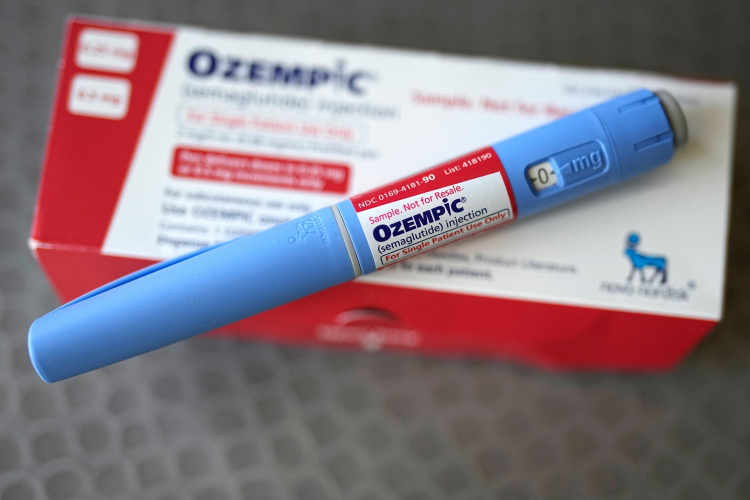
The GLP-1 market has been running much like the second scenario, and prices have tumbled fast.
The Rapid Evolution of Affordable GLP-1s
In 2022, patients without insurance coverage for the now wildly popular weight-loss drugs faced costs exceeding $1,000 a month, a price that put them out of reach for most people who wanted them. Then, in November of 2023, the FDA approved Eli Lilly's Zepbound, giving Novo Nordisk's Wegovy its first real branded rival. A few months later, Lilly launched Lilly Direct, a platform that sold the drug straight to patients for a cash price, no insurer or pharmacy benefit manager in between. Twelve months after that, Lilly and Novo were actively repricing against each other in public — prices have fallen anywhere from 12 to 23 percent.
A “race to the bottom” isn’t always bad.
A remarkable model to follow
All of the progress we’ve seen in GLP-1 pricing has occurred in the “cash channel” because, in the insured market, confidential rebates lower a health plan’s costs after a prescription is filled, while a patient’s deductible or percentage-based payment might remain tied to the pre-rebate price. Direct buying bypasses the opaque insurance-and-rebate channel and PBMs.
Margins on individual doses shrank, but revenue grew anyway because volume expanded once the price started to look affordable to the median consumer. That's the outcome MFN advocates insist can't happen without a mandate: lower prices and preserved R&D funding, reached without a single regulator in the room. Squeezing profits at the expense of future research is the strongest argument against price-setting schemes, and GLP-1 pricing has shown how to get around it.
Government price-setting is engineered to poll well, as in Nixon's case. It's a promise a candidate can make in one sentence on a debate stage to show they are fighters. But what actually lowered GLP-1 prices was patience and process — patent expirations, a direct-to-patient sales channel, and two rivals who could each see exactly what the other was charging.
If Washington wants more of what just happened with Zepbound and Wegovy, the fix isn't a new scheme linked to foreign price controls. Simply tear down the rebate system that hides prices from patients in the first place, and then get out of the way.
