




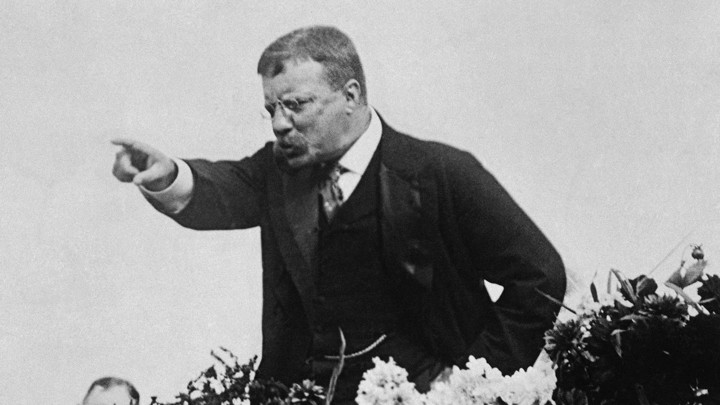
"It is not the critic who counts; not the man who points out how the strong man stumbles, or where the doer of deeds could have done them better. The credit belongs to the man who is actually in the arena, whose face is marred by dust and sweat and blood; who strives valiantly; who errs, who comes short again and again, because there is no effort without error and shortcoming; but who does actually strive to do the deeds; who knows great enthusiasms, the great devotions; who spends himself in a worthy cause; who at the best knows in the end the triumph of high achievement, and who at the worst, if he fails, at least fails while daring greatly, so that his place shall never be with those cold and timid souls who neither know victory nor defeat."
Former American president (1901-09) Theodore Roosevelt’s “man in the arena” is remembered for striving, risking failure and doing the work while critics watch from the sidelines. That image also captures what makes American free enterprise so powerful: People can take an idea, put their own effort and resources behind it, and try to build something new or better.
The rewards are never guaranteed. The chance to earn them matters. It encourages a worker to learn a new skill, an inventor to pursue an uncertain breakthrough and an entrepreneur to open a business. Those individual decisions in diverse industries, multiplied across a country, have helped make the United States the world’s economic leader.
The Role of Government
Americans disagree about how much government should do to shape that opportunity. Roosevelt himself was a progressive reformer who sought to curb what he saw as abuses of concentrated power while preserving a capitalist economy, free enterprise and individual freedoms. Friedrich Hayek in The Road to Serfdom (1944), and Milton Friedman in Capitalism and Freedom (1962) later warned that expanding government control would erode economic freedom. Their differences still frame a useful question: Which rules keep the arena open and prosperous, and which ones make it harder to enter?
Government has a role in protecting property rights, enforcing contracts and maintaining fair and open competition. But every new obligation also has a cost. When taxes, regulations and/or public debt rise without sufficient attention to their effects, the burden can fall on the people trying to start, hire and invest and thwart the process from creating assets, goods, services and jobs and improving human lives.
Uncontrolled Debt
The U. S. federal debt’s rise past $40 trillion should sharpen that concern. Notably, the debt grew by $1 trillion in just five months this year. Key factors included high interest costs and increased defense spending in the Middle East, along with U.S. legislative tax, spending, and regulatory policies that began in the 1960s. Today’s choices leave future taxpayers less room to maneuver. Leaders of both parties have contributed to the problem by promising benefits or tax relief without making durable choices about spending. A defense of enterprise has to include fiscal discipline.
Measuring Economic Success
That discipline should be paired with an honest account of what the economy has achieved. Since 1950, the global economy grew from roughly $600 billion to a projected $126.3 trillion by the end of 2026, per the Woodrow Wilson Center and the International Monetary Fund (IMF). The United States has remained the world’s largest economy for generations despite accounting for only a small share of its population. Its inventors, innovators and businesses have helped develop technologies that changed daily life, from communications and computing to medical imaging. Those advances emerged from public research, private investment and the freedom to turn discoveries into useful products.
We should be careful, though, about claiming every invention and/or innovation for one system or treating economic output as the whole measure of success. A strong economy matters because of what it allows people to do: support a family, pursue a vocation, solve a problem and build a future. Its promise is personal and powerful.
The Debate Over Capitalism
That is why the debate over capitalism should be more concrete than a contest of labels. We can argue over tax rates and the proper reach of regulation while agreeing that opportunity should be broad and productive effort should be rewarded. We should ask whether a policy helps the next person enter the arena or leaves the field to those already established.
As history has taught us time and again, the only system of economic organization that has produced economic results superior to what it inherited is free market capitalism. As of this writing, many younger Americans are considering a socialist model that has never worked wherever it has been tried. Perhaps what speaks most powerfully to the American competitive free enterprise system is that a large portion of the world would give up what they know and are used to – many living under various forms of totalitarianism, communism, or socialism – travel halfway around the world to become Americans, legally or not. They want to be in the arena. They want a chance at freedom and to make their own way in life.
Roosevelt’s image endures because it respects the person who tries, even when the attempt falls short. America’s economic strength depends on giving more people that chance. If we want the next generation to invent, to innovate, work and invest here, we should protect competition, address our debt and keep the arena open, prosperous and successful…as many young people already believe it to be.
