

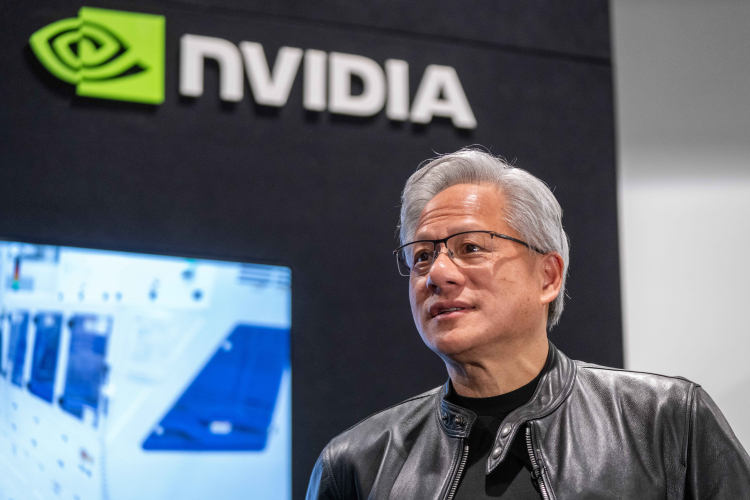
AI, having grown into a massive industry, is expanding its ripple effect along the trajectory of a rapidly evolving computing society. That speed, whether the signal is positive or the residue is negative, is quickly absorbing the economy as a whole. NVIDIA, which began by developing graphics chips for gaming and multimedia, paid attention to growing demand for 3D graphics. The GPU's parallel-processing capability eventually connected gaming to science, research, data centers, and the enormous new demand called AI. It satisfied the desires of the gaming generation and connected a new social wave to the economy. It absorbed an opportunity that had been available to others and expanded its Volume.
NVIDIA set its sights on 3D graphics for gaming and multimedia in 1993. It released the GPU in 1999, and in 2006, CUDA extended the GPU's parallel-processing capability into scientific and research computing. Then, in 2012, AlexNet's use of NVIDIA GPUs became one of the important turning points in modern AI. The flow can be organized into a single chain: graphics demand from gaming → GPU → parallel computation → CUDA → scientific and research computing → deep learning → AI → data-center investment and corporate AI adoption.
What matters is that NVIDIA did not need to predict today's AI market from the beginning. Its official history shows a continuous expansion from graphics to GPU, CUDA, and AI. The company's role was to keep developing technology while connecting emerging social demand to new industrial applications.
NVIDIA's SEC filings show how this technological expansion changed the company's economic center of gravity. In FY2022, Data Center revenue was $10.6 billion and Gaming revenue was $12.5 billion. By FY2024, Data Center revenue had risen to $47.5 billion while Gaming revenue was $10.4 billion. Total revenue grew from about $26.9 billion to $60.9 billion. A technology created around one relatively small social demand—gaming—met a much larger social need. The important point is not that gaming was small, but that technology built for one purpose can acquire a different economic meaning when society's needs change. NVIDIA did not simply increase chip sales; GPU computing found much greater economic potential in AI, shifting the center of the business toward data centers.
Hardly anyone could have expected AI to enter the economy and daily life this quickly. Economic flow can gain force through this kind of dynamic connection. A major economic flow cannot simply be manufactured by one person. It forms as social change, human behavior, corporate response, and investment connect with one another. Turning that natural flow into economic Power becomes a manager's job.
NVIDIA alone is not enough to show that AI has spread across the economy. McKinsey survey data provides a broader view. The share of surveyed organizations reporting AI adoption in at least one business function was 56 percent in 2021, 50 percent in 2022, 55 percent in 2023, 72 percent in the first half of 2024, and 78 percent in the second half of 2024. Corporate AI use remained in the 50 percent range through 2023, but the pace changed sharply in 2024 after generative AI emerged. NVIDIA's long-developed GPU and CUDA capabilities were already in place; the rapid growth of AI demand created a new economic intersection between that technology and a changing social environment.
Amazon offers another example. Its starting point was an online bookstore and e-commerce. As the business grew, Amazon faced the practical problem of how an internet company could secure enough IT infrastructure. It turned that internal problem into an external market opportunity. AWS began with S3 in 2006, followed by EC2 the same year. Amazon turned the storage and computing infrastructure it needed into services that other companies could use. Rather than creating a massive market from the outset, it created new economic Volume by solving a problem it had actually experienced.
COVID-19 created a different kind of social problem. In 2020, offline operations became difficult, and countless small businesses struggled because customers could not come to their stores. Shopify responded by enabling merchants to sell directly online. In 2020, Shopify's revenue reached $2.9 billion, up 86 percent year over year, while platform GMV reached $120 billion, up 96 percent. In 2021, merchant GMV rose to $175.4 billion, up 47 percent, while revenue reached $4.6 billion, up 57 percent. A problem created by a social disruption became a new sales channel and then a broader commerce infrastructure.
The flow of the economy does not always begin with a massive industry. Sometimes it begins with a small social desire or a problem encountered in the field. What matters is the moment when that Issue connects with another demand. At that moment, the economic ripple can suddenly become much larger. The protagonist of Hegemony can change according to who succeeds in connecting with that flow.
COVID-19 also shows how a social Issue can spread through an entire economy. Restrictions on movement changed consumer behavior, increasing online orders and demand for shipping and logistics. According to the U.S. Census Bureau, U.S. e-commerce sales rose 43 percent, from $571.2 billion in 2019 to $815.4 billion in 2020—an increase of $244.2 billion in one year. The effect continued beyond temporary consumption changes. In the Census's comparison of the 2017 and 2022 Economic Census, employment in Electronic Shopping and Mail-Order Houses increased by more than 1.2 million, or 215.3 percent. Revenue at Local Messengers and Local Delivery also increased 314 percent.
This is not simply a collection of company success stories. It shows a broader pattern across the American economy: a social Issue can become an economic ripple effect through a recognizable sequence—social change or problem → new demand → corporate response → industry expansion → structural change in the economy.
Remote work became another new economic space. According to the BLS American Time Use Survey, 22 percent of employed Americans did some or all of their work at home on days they worked in 2019. In 2020, amid the COVID-19 pandemic, that share nearly doubled to 42 percent. The social environment changed the location of work, and that change created new demand for digital collaboration, communications, office technology, and related services.
Digital commerce also exposed another problem: “Why does it take days for money to move when goods can be ordered in seconds?” The social demand for faster payments appeared through Fintech. In a 2021 Federal Reserve survey, three-quarters of U.S. businesses said offering faster payments was important, while nine out of ten expected to be able to use faster payments within three years. The Fed explained that the spread of digital commerce accelerated this demand.
Economic flow does not appear from the beginning as a fully formed massive industry. A small social change or a problem in the field changes people's behavior; that behavior creates new demand; and companies and capital expand that demand into an industry. The same pattern appears whenever technology, behavior, and capital meet a new social need. At that point, a small change becomes the Flow of the entire economy. The flow of the economy feeds on social Issues and grows its ripple effect.