

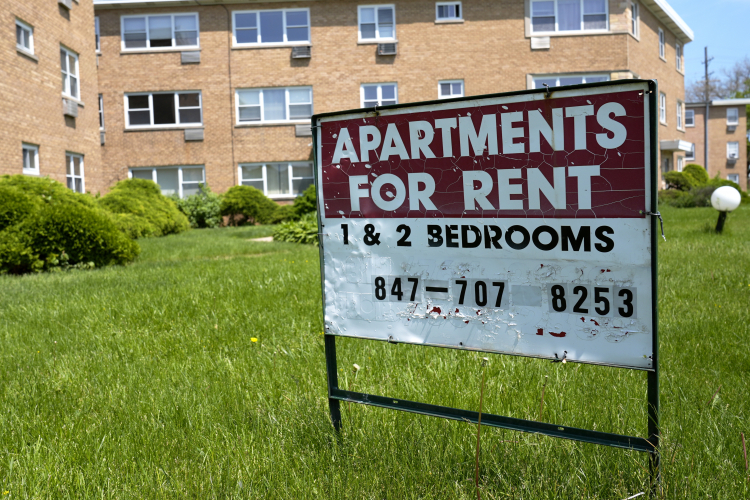
Across Europe, the housing shortage is getting worse – and left-wing parties have discovered it as a central political issue. Recently, the far-left party DIE LINKE even won the elections in Berlin, the German capital, campaigning on a demand to nationalize large housing companies. In Spain, hundreds of thousands of people have demonstrated in favor of stricter regulations.
But do such measures really help? We should learn from Germany's experience, where a form of rent control known as the "Mietpreisbremse" (rent brake) was introduced back in 2015 and has since been tightened several times.
Yet this rent control policy is producing precisely the opposite of what it was intended to achieve. That is the conclusion of a new doctoral dissertation completed at the University of Regensburg, Europe's leading university for real estate studies.
In Germany, the gap between rents paid by existing tenants and rents charged for newly rented apartments is growing wider. In his 2026 dissertation, "Housing Markets Between Regional Heterogeneity and Political Intervention," Lars Jagemann analyzes 107 German cities. He finds that the gap between existing rents and asking rents for new leases averages 20 to 25 percent, reaching as much as 50 percent in major metropolitan areas.
This creates what economists call a "lock-in effect." As Jagemann explains, existing tenants hold on to their inexpensive, legally protected rental contracts and avoid moving into the more expensive segment of the market, even when their current homes no longer suit their circumstances.
As a result, the supply of housing available to people who need to move, such as young families or those starting their careers, shrinks, making it increasingly difficult for them to find an apartment. The market becomes increasingly divided into two groups: "insiders," who benefit from stable, inexpensive rental contracts protected by regulation, and "outsiders," who are looking for housing and face sharply rising market rents for new leases.
The dissertation confirms what economists have repeatedly warned about: While German housing policy aims to promote social stability and protect tenants, the measures introduced create unintended market distortions that can, paradoxically, harm precisely those groups they are supposed to protect. Regulation, the author concludes, is becoming increasingly "dysfunctional."
In theory, there are two possible responses: even more regulation, or deregulation and greater reliance on market forces. The author himself makes no direct recommendation. It would have been desirable for the dissertation to examine in greater detail the problems associated with even stricter regulation, particularly the "interventionist spiral" identified by economist Ludwig von Mises.
According to Mises, tighter regulations may temporarily alleviate certain problems, but they create new ones. Governments then introduce additional regulations to address these problems, which in turn produce further unintended consequences.
In fact, the dissertation provides empirical confirmation of this mechanism. Since Germany introduced its rent brake in 2015, the policy has already been tightened several times. The so-called "Kappungsgrenze," which limits rent increases for existing tenants, has also been made more restrictive.
The central finding of the dissertation is that precisely because housing is a fundamental social need, housing policy interventions must respect the inherent mechanisms of the market. Regulations that work against fundamental economic incentives provoke avoidance strategies that can place additional burdens on vulnerable groups. Sustainable housing policy, so the authors, must therefore make intelligent use of market mechanisms rather than fight them: by creating incentives instead of imposing prohibitions, expanding supply instead of capping prices, and establishing transparent, long-term rules instead of constantly changing interventions.
The author also places particular emphasis on the damaging effects of political uncertainty. Such uncertainty is created not only by actual government policies. Even the discussion of possible new regulations can generate uncertainty, prompting investors to adopt a wait-and-see approach.
Uncertainty is always bad for investors, but it is particularly damaging in real estate, the author argues, because investments require long planning periods and are largely irreversible. Unlike stocks, investors cannot simply exit a construction project at any time without losing substantial amounts of money.
Here, too, a vicious circle develops: uncertainty reduces housing supply, which drives up property prices and rents. These increases are then used to justify new political demands for intervention, creating even more uncertainty.
Alongside healthcare and finance, housing is among the most heavily regulated markets in many countries. It is no coincidence that these are precisely the sectors that experience recurring crises. More regulation increases costs and reduces efficiency.
Across Europe, center-right parties are making the mistake of leaving housing policy to the left instead of making problems such as high rents and housing shortages central issues themselves. They should demonstrate that only sweeping deregulation can substantially expand housing supply. Javier Milei is currently showing exactly how this can be done in Argentina.