

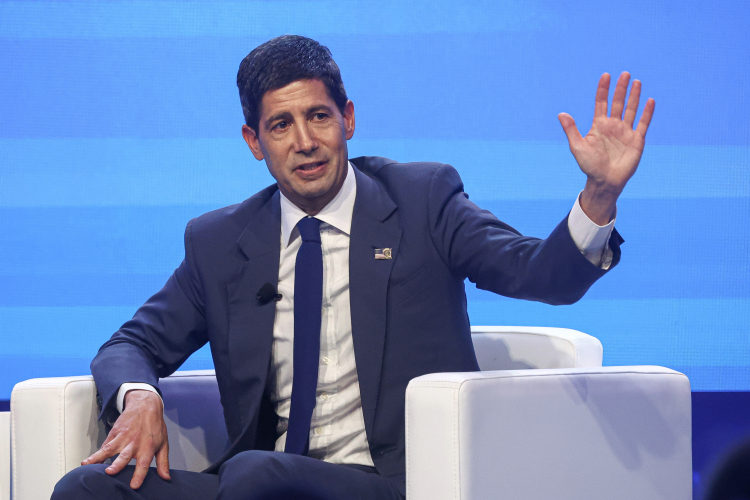
Markets can't tell whether the Federal Reserve will raise interest rates next week. After September's inflation reportcame in hot at 3.7%, markets moved the probability of a hike from 20% to 50%. Within days, fed funds futures put itback near 20%. Commentators are irritated. Chairman Kevin Warsh has gone quiet, no longer telling them what comes next. The Fed's statements don't contain forward guidance anymore, and Warsh declines to submit his own interest rate forecast, calling it "not helpful in the conduct of policy."
The complaint is that nobody knows what the Fed will do. The complainers have missed the point of central banking. Predictability is good, but the Fed can't commit with any credibility to a specific interest rate quarters in advance. More importantly, only central banks without rules-based policy need to preannounce their decisions. It's the lack of rules that needs fixing.
Forward guidance was the Fed's ongoing preview about where rates were headed. It was sold as a transparency mechanism. But it was really a stand-in for something the Fed didn't want: a binding commitment. In the 1970s, economists Finn Kydland and Edward Prescott showed why benevolence and competence couldn't substitute for genuine rules. Credible monetary policy must constrain monetary policymakers. Low, stable inflation, with no sacrifice of employment, results when central banks tie their own hands in predictable ways.
By the 1980s that argument had won over most macroeconomists. But central bankers, living in the world of practical politics, found a way to avoid meaningful rules. What they adopted was what Ben Bernanke called "constrained discretion": rule-like behavior sometimes, with the central bank retaining the right to deviate according to its judgment about what the economy needed. The problem should be obvious: if policymakers get to decide when to follow a rule, the rule doesn't really constrain them.
As a result, the Fed regularly gets away with moving the goalposts. In December 2012 the Fed promised to hold rates near zero at least until unemployment fell to 6.5%. When unemployment got close, it dropped the threshold. In 2020 it promised to let inflation run above 2% to make up for past shortfalls. When inflation greatly exceeded 2%, it hand-waved away the surge as "transitory," and then scrapped the make-up strategy altogether. Each time the Fed said one thing and did another; each time its promises meant less. Inflation has now run above target for more than five years. American businesses and families, rather than monetary technocrats, ultimately pay the price of the Fed's cheap talk.
There's a deeper error here. The insight that reshaped economics half a century ago was not that the Fed should manage expectations by talking. Rather, it was that market actors form expectations from what the Fed actually does. Press conferences don't create credibility. Regime changes do. The Fed tried to get the benefits of fundamental institutional change from mere speech acts. But the public wasn't fooled.
Forward guidance rested on a false premise: that households and businesses need to know the Fed's policy rate quarters or years in advance. They don't. The interest rate is a price—the price of capital—and the whole point of a price is to move in conjunction with supply and demand. There's no way the Fed can make predictions that accurate. Pre-committing to a rate path means pre-committing to error, sooner or later.
What the public needs to know ahead of time is not the price of credit but the fundamental monetary yardstick: what a dollar will buy next year and the years after. Central banks are bad at controlling interest rates. In contrast, they are capable of controlling inflation when they're made to. Center the promise on the price level, which gives the economy what economists call a "nominal anchor," and interest rates will find their correct levels on their own.
Importantly, Warsh's silence is good only if it's a first step towards a stricter, rules-bound monetary regime. While not talking about the Fed's policy instrument is fine, not talking about the final goal of policy could be disastrous. Because households and businesses necessarily incorporate expectations about the dollar's purchasing power into their plans, the Fed can't afford not to have a rule. The only choice is between a vague, informal directive—like we have now with the dual mandate and data-dependent guesswork—and a dollar-stability rule with teeth.
Warsh has long argued the Fed talks too much. So far, Warsh’s Fed seems like it will focus much less on talking and much more on doing. His task forces on the Fed's framework and communications report by year's end. Let's hope they recommend the right way forward: a single price-stability goal, preferably with consequences for officials who miss it. Then the Fed can stop talking about rates for good, for the simple reason that nobody will need it to.