

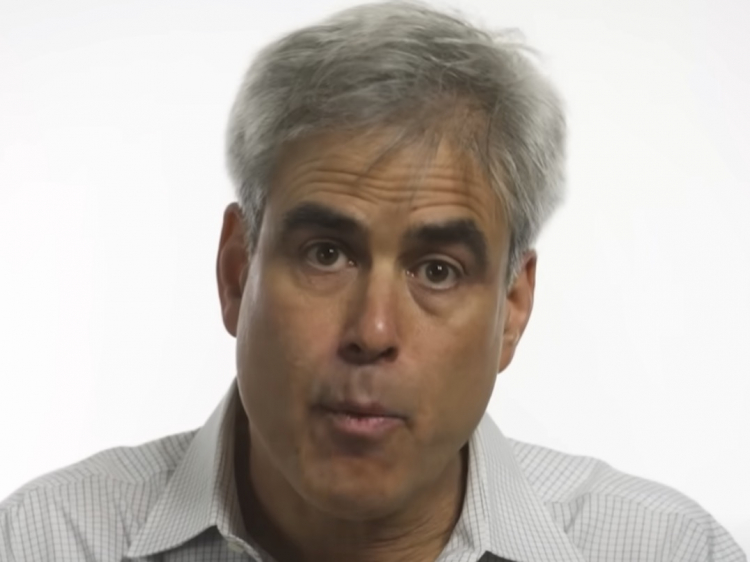
In the minds of those opposed to a digital show-your-papers regime, collisions with the writings of Jonathan Haidt, a renowned psychologist whose writing about social media’s effects on children has gone haywire, usually generate skepticism, and not agreement. Not so with respect to the premise of a recent article in Tech Policy Press on parental consent mandates, which Haidt coauthored. Proposals such as the App Store Accountability Act (ASAA), introduced in Congress and myriad state legislatures (and enacted by four) would require parents to approve before children download and use applications, including social media platforms. Yet, as Haidt notes, permissive parents might well go on approving their children’s social media use, leaving the status quo unchanged. Add this to the law’s other deficiencies, which render its chances of proving effective little better than null.
This period of agreement is, however, regrettably short-lived. To Haidt and his coauthors, the malady is “the collective action trap in which parents feel they must allow their children access to risky or harmful social media platforms so they won’t be socially isolated;” and the remedy, a full-scale ban on children’s use of platforms deemed dangerous. And not just young children—adolescents, until, at minimum, age 16, are specified.
Ah, but here is the rub: Haidt’s theory of “the collective action trap” verges, in moments of candor, on the Orwellian. He writes: “by leaving the door open for kids to beg for access because their friends have it, parental consent policies undermine parents’ ability to hold a firm line and delay social media use until the end of puberty.” That is, freedom is slavery, and for parents truly to be at liberty, government men must herd them over the brink of freedom. Such a gloss is uncharitable, to be sure, but this is, nonetheless, nasty logic, rife with nasty presumptions about politics and the human condition.
This is not to say that “the collective action trap” does not bedevil many parents. First off, although many parents worry feverishly about their children’s relationship to digital technologies, many worry far less than Haidt assumes. Many parents simply harbor different preferences, and come to different decisions, from those Haidt prefers.
Second, the sheer degree of social media usage among children: “The average adolescent in the US spends nearly five hours a day using social media, according to a 2023 Gallup survey,” Haidt and his compatriots relate. To allow one’s child some time on social media—which perhaps may be granted, arguendo, as for many parents a social inevitability—is quite different from allowing one’s child to give over roughly a third of his waking hours to such digital pursuits. Haidt’s vaunted trap cannot alone account satisfactorily for parental indulgence.
Third, to advocate a maximalist regulatory regime, it must be proven that existing, marketed features now on the market purporting to place the ability to control children’s digital lives at the fingertips of parents, literally, cannot perform their stated function. To argue as much, Haidt’s article links to a single report published by the Molly Rose Foundation, which alleges Instagram’s child-safety suite to be ineffective and insufficient. Put aside for the moment the report’s merits; discussions of platform-level safety features, and do not even approach the resolution, of the question. Upon the purchase of an Apple or Android device, it requires only minutes to impose child-safety settings which, if deployed fully, turn a child’s device into something approaching a more portable landline. Configured properly, these features allow parents to enjoy full dominion: what applications may be downloaded, the amount of time allowed to each downloaded application, even what websites may be accessed are, if only a few settings are engaged, inescapably parentally determined.
Haidt, who, given his empirical shortcomings, cannot be laden with the full burden of responsibility for the popularity of his research, has operated as the prophet of the self-styled “kids’ online safety” activists—a movement whose blind resolve to verify the age of every American who ventures into the digital domain endangers the children in whose name it works (as well as everyone else). But the prophet has stepped out well beyond his flock. To date, the leaders of this movement claim to support parental choice; in fact, this claim is deployed offensively against those who oppose enforced age verification and parental consent. The Digital Childhood Alliance (a prominent advocate of the ASAA), behind which the safety-ist coalition stands, says the bill “restores parental control over digital spaces.” The ASAA’s sponsors in the Senate and House of Representatives tout, respectively, its potential to “put parents in control” and to “empower[] parents.” Haidt says this is so much hogwash; there is dissention among the faithful.
Haidt maintains that parents ought not to be left with the choice—ought not to parent their children—because the choice may prove too difficult. The government, instead, must stand over parents and children—not only as an immense and tutelary power, in Tocqueville’s phrase, but as an immense and parental power, a further intrusion into the hallowed sphere of private life. This ought to suffice to elicit the characteristic American mistrust of self-assured expertise seeking to compel adherence to its peculiar, myopic conceptions of the good.