

I grew up in the 1970s, when television meant three major networks (ABC, NBC and CBS) and local public television. If nothing new aired, we watched reruns of I Love Lucy or The Andy Griffith Show. Sunday evenings brought The Wonderful World of Disney.
In 1980, I rushed home one Friday night to find out who shot J.R., and every Friday thereafter to keep up with Dallas. Miss an episode, and you might wait months for a rerun.
Today, almost any entertainment is available on demand. Streaming libraries are enormous, and social-media feeds offer endless videos.
AI pushes this abundance further. Television once gave millions of us the same shows. Cable, then streaming, split that audience into niches. Now generative AI can create for an audience of one: a story shaped to your mood, a video built around your tastes. As Deloitte's 2026 media and entertainment outlook explains, AI is lowering production costs and barriers to content creation.
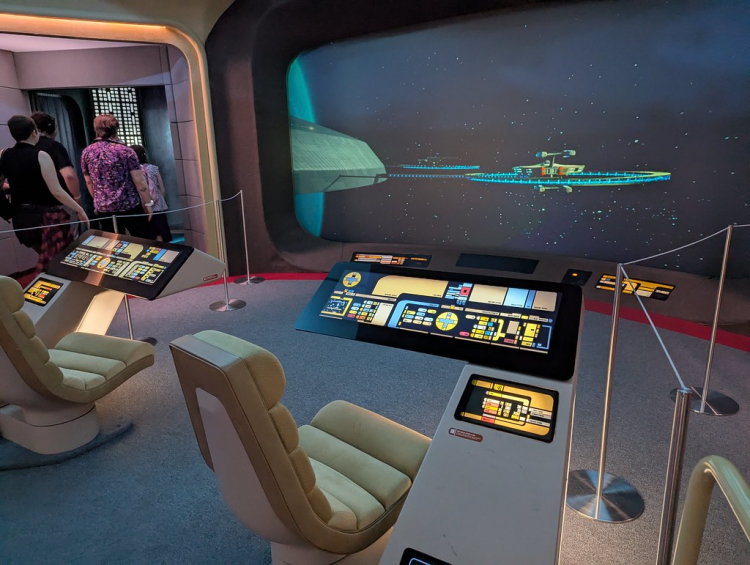
Imagine Captain Kirk, Spock, McCoy and Scotty aboard the Star Trek shuttlecraft Galileo singing Queen's "Bohemian Rhapsody." AI can, and has, turned that sort of unlikely idea into entertainment.
Entertainment is becoming virtually limitless. Our time is not.
Ad-supported platforms strive to maximize viewing time and ad exposure. Algorithms learn what interests us and serve more of it. I'll open Instagram or TikTok with no destination in mind, and an hour later I'm still there. I picked every video. I never really picked the hour.
One explanation is what economists call present bias: we give immediate rewards more weight than our longer-term intentions. One more video is a small treat. Whatever else we meant to do can wait.
A 2022 American Economic Review study by Hunt Allcott, Matthew Gentzkow and Lena Song examined social-media use in a randomized experiment. Their model estimated that self-control problems accounted for 31 percent of social-media use in the experiment. Allowing users to set future screen-time limits substantially reduced use.
That complicates the standard economic view of consumer choice. If we judge entertainment solely by what people choose to watch, another click looks like another benefit. But people also install website blockers and set screen-time limits. That is revealed preference too, a signal that people want help sticking to their own intentions.
Someone can enjoy every video in the moment and still regret the hour. Choosing what to watch next and choosing how to spend an evening are different decisions. A feed presents us with the first, over and over, while the second slips away.
Nor does a price of zero eliminate the cost. As my friend and fellow economist Tim Kane writes, "the most neglected cost is time."
Drive to Walmart and wait in line to return a $5 item, and you may spend 45 minutes recovering $5. With a free video, nobody even hands us a receipt.
Keeping people watching isn't the same as making them better off. AI could deepen that problem. It could also create an opening for businesses that help consumers find something they genuinely enjoy, and then stop.
Think Weight Watchers for digital gluttony: a service that helps customers enjoy the time they choose to spend without losing an evening to scrolling. Instead of being paid by advertisers to extend a viewing session, it would be paid by customers to respect their limits.
There is already a market for help managing attention. Screen-time app Opal says it reached $10 million in annual recurring revenue in 2025. AI could take such services beyond blocking distractions, learning from what users say they regret to help them find entertainment they enjoy within the time they meant to spend.
Whether that broader service can attract enough paying customers remains an open question. But AI need not serve only the businesses competing for our attention. It could also serve those of us deciding where that attention goes.
Sometimes I just want to watch something silly. But I'd also like to feel that the decision is mine.