

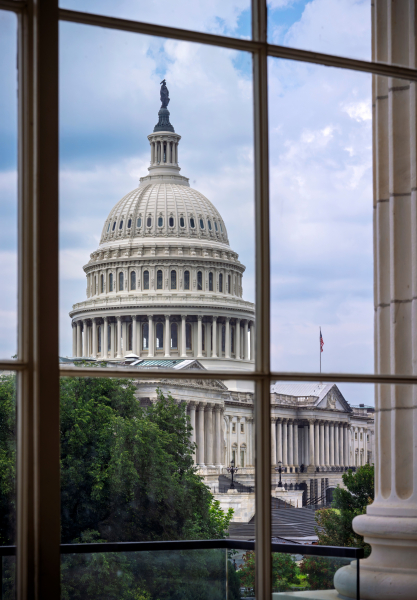
President Trump’s promise of $5,000 checks did not save Republicans’ congressional majorities. Helping pass permitting reform could still deliver a lasting economic win before the next Congress arrives. Permitting reform just passed the Senate and now only needs to pass the House to make this an effective Lame Duck session. But, with only 3 weeks of legislative days left and a lot of Republicans looking for new jobs, it is going to take a big push to get the bill over the finish line.
Artificial Intelligence companies are racing to develop faster, smarter, and more efficient products, and they are facing hurdles and bottlenecks imposed by the political class. Even with these obstacles, Anthropic just went public with an almost $2 trillion valuation. However, that valuation is based on a forecast that the company will be able to access the amount of electricity and raw materials it needs to continue growing.
This will require more mining and more energy production. Nor is it just AI that needs energy; manufacturers, schools, and communities all need energy in order to operate. In the U.S., the permitting process remains slow and unpredictable, making it harder for the nation’s infrastructure to keep up. We have an outdated power grid that is being pushed to its limit, while government regulations make it hard, or even impossible, to fix problems before they occur.
Power projects completed in 2025 took a median of more than five years from requesting a grid connection to entering service, according to Berkeley Lab’s available data. A 2024 S&P Global study estimated nearly 29 years from discovery to production for U.S. mining projects. AI on the other hand is making major leaps every 15 days. And, the mineral supply chain that underpins the whole system is slowly strangling under this pressure.
China is currently dominating the mineral space, and they generated more than twice as much electricity as the United States in 2025. Defensive legislation like tariffs and trade embargoes don’t help the U.S. win the race. In fact, defensive public policy almost assures that the U.S. will fall behind. The permitting bill is one of the first opportunities the Trump Administration has to go on the offensive against China.
The Bipartisan American Affordability and Jobs Act (BAAJA) helps close the gap.
BAAJA would give federal agencies 60 days to tell developers whether their applications are complete, and strengthen developers’ ability to enforce deadlines in court. Most importantly, BAAJA brings confidence that an approved permit will remain approved, by restricting agencies from revoking or altering authorizations.
Lame Duck sessions are usually, well, lame. Uninterested members of Congress that are soon to be out of job spend time licking their wounds instead of continuing to work for the American public. This one has a chance to be different, and also show that bipartisanship is not a relic of politics past. BAAJA passed the U.S. Senate 62-33. Now, President Trump and Speaker Johnson need to do everything in their power to rally Republicans to actually show up and pass the bill in the House.
Next Congress this bill will look different. Next Congress this bill will face a new wave of Democrats that are self-proclaimed socialists. Next Congress the permitting bill will face a President Trump that is under siege. This is an opportunity to help Americans compete on a global stage, and prove that bipartisanship still exists.