




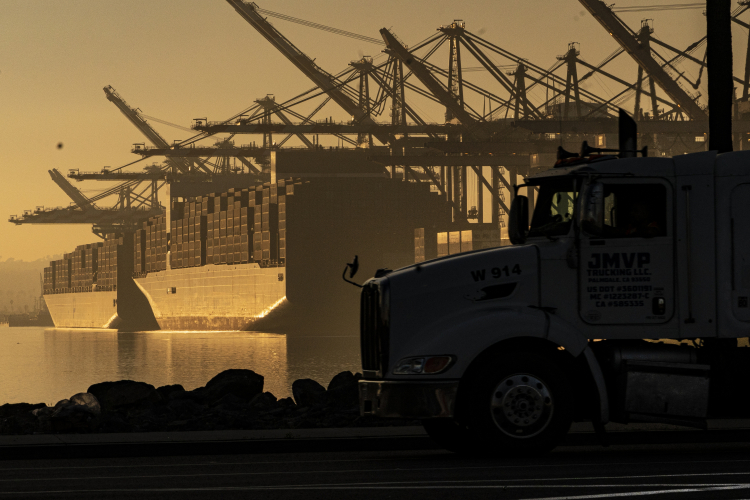
As the dock workers' strike at East Coast ports fades into the public’s rearview mirror, Hurricane Milton’s shipping and port disruptions serve as a reminder that the problems with America’s maritime infrastructure will never truly disappear from sight. Even without hurricanes and strikes, systemic issues in the way we manage our ports and shipping lanes threaten our economy.
It’s time for Congress and the White House to chart a new course. To start, we should freeze the unused portion of federal funds that U.S. ports received from the 2021 Infrastructure Investment and Jobs Act until the union’s automation protection demands are resolved. The U.S. Maritime Administration has made $17 billion available for “modern, resilient and sustainable port and freight infrastructure,” but taxpayers shouldn’t be forced to throw good money after bad if these grants can’t include standard automation steps used worldwide.
The reluctance to thoughtfully introduce automation while protecting workers’ interests is a key reason why U.S. ports rank so poorly globally. Most of our ports struggle to rank above 150 out of more than 400 surveyed by the World Bank. This inefficiency costs taxpayers and consumers billions in delays and red tape. It’s time to stop subsidizing inefficiency and start building for the future.
One way to tackle these inefficiencies is by removing the barriers that prevent new port construction. The Brookings Institution’s Clifford Winston notes that “new ports are not being built for the same reasons the United States has built only one major airport since 1973: There is little economic incentive, and the regulatory constraints are formidable.” This leads to increased congestion, delayed shipments, and higher costs across the board for consumers and businesses alike.
Fortunately, Rep. David Rouzer’s bipartisan reform legislation offers a potential starting point for addressing these challenges. This legislation could encourage new construction by streamlining permits and preventing abuse of “Build America, Buy America” restrictions that are often misused to slow or stop vital projects. This would provide a much-needed boost to our port infrastructure, increase capacity, and improve the flow of goods.
However, addressing inefficiencies in port operations is only part of the solution. Another major hurdle is the 124-year-old Jones Act. Signed into law in 1920, the Jones Act mandates that goods shipped between U.S. ports must be transported on vessels built, owned, and operated by Americans. While it may have made sense a century ago, this protectionist relic has long outlived its usefulness and now serves as an albatross around the neck of American commerce.
The Act stifles competition, hinders innovation, and impedes economic growth. A recent study showed that it raises energy prices for East Coast consumers by a staggering $769 million annually. In essence, the Jones Act is a hidden tax on every American, artificially inflating the cost of goods moved by water. The federal government often has to waive the Jones Act to make it easier – and cheaper – to get urgent supplies where they’re needed after a natural disaster.
Repealing the Jones Act would bring immediate and substantial benefits, including lowering shipping costs and increasing efficiency. East Coast energy prices would decrease, providing much-needed relief to millions of households. Manufacturers would benefit from lower production costs, and these savings would ripple throughout the economy, leading to reduced prices for consumers.
Critics may argue that repealing the Act would harm American shipbuilders and mariners, but the reality is that it has failed to achieve its intended goal of maintaining a strong merchant marine. Instead, it has left us with an aging, inefficient fleet that struggles to compete globally. Repealing the Act would revitalize our maritime industry, forcing it to become more competitive and innovative, leading to a stronger, more resilient sector overall.
If dock workers continue to demand “protection” from automation along with increased pay and benefits, it’s only fair that the American people receive something in return. Taxpayers shouldn’t be on the hook for outdated policies that drive up prices and strangle innovation. By freezing unused infrastructure funds, streamlining port construction regulations, and repealing the Jones Act, we can begin to rescue America’s floundering maritime policy and chart a course toward a more efficient and competitive future.
Now is the time for Congress and the Biden Administration to act. American families have endured enough economic hardship. These steps will give them the relief they deserve and help salvage our maritime industry before it’s too late.
If Ports Won't Automate, No More Taxpayer Dollars
October 14, 2024
Comment
Show comments
Hide Comments
