


The Invention of Pop Economics - 3/31/10
 | Joseph Stiglitz should win a second Nobel Prize, this time for fiction. More |
A Bet on Rising Health Costs - 3/31/10
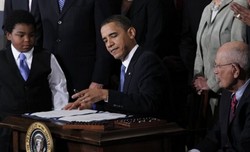 | Pick any year in the future between 2021 and 2046. Tell me your estimate today of how much Uncle Sam will spend on health care that year. I'll bet each of you $5,000 that Uncle Sam's actual expenditures on health care in that year — adjusted for inflation — will be at least 25 percent higher than your estimate. More |
Trying to Tame the Unknowable - 3/29/10
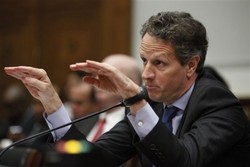 | A few years ago, some people thought that major financial crises were a thing of the past. We know that was wrong. Despite our best efforts, more financial crises are likely to occur. As we recover from the last one, we should prepare for the next. More |
The Limits of Economics - 3/29/10
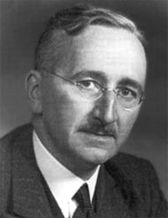 | Economics achieved coherence as a science by amputating most of human nature. Now economists are starting with those parts of emotional life that they can count and model (the activities that make them economists). But once they’re in this terrain, they’ll surely find that the processes that make up the inner life are not amenable to the methodologies of social science. The moral and social yearnings of fully realized human... More |
Krugman's Chinese Fallacy - 3/29/10
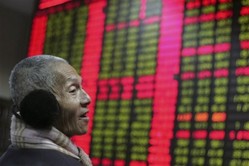 | Should the US follow Paul Krugman’s advice and use protectionist policies against China’s exports to encourage a revaluation of its currency? This column argues against this idea. Far from saving jobs, a revaluation of the Chinese currency might even cut global economic growth by 1.5% More |
Trade War With China? - 3/24/10
 | Paul Krugman, an American economist, wants to start a trade war with China. It would be worse than the 1930s. More |
My Inflation Nightmare - 3/24/10
 | Michael Kinsley asks, am I crazy, or is the commentariat ignoring our biggest economic threat? More |
Moral Lessons at Wal-Mart - 3/24/10
 | Grocery shopping may seem an unlikely form of moral education, but researchers argue in Science that the development of “market norms” promotes general levels of “trust, fairness and cooperation” with strangers. More |
Statism Is Riskier Than Free Markets - 3/19/10
 | The financial crisis of 2008, still far from over, has done severe damage to the reputation of the free market. However, what we might call the Greek affair should make us question the statist solution. We ought to consider the possibility that public management could prove even more dangerous than private—that state regulation is no less chancy than deregulation. More |
Defaults That Make Sense - 3/19/10
 | For most of the last decade, Kazakhstan gorged on profligate lending, courtesy of global banks – just like much of southern Europe. The party came to a crashing halt in 2009. The Kazakh government, which had been scrambling to support its overextended private banks with capital injections and nationalizations, gave up and decided to pull the plug. The banks defaulted on their loans, and creditors took... More |
Do Benefits Extend Joblessness? - 3/18/10
 | Unemployment benefits provide a small amount of help to a number of people who desperately need it. But some economists have gone too far by claiming that unemployment insurance is stimulating the economy. More |
California's Failing Economy - 3/17/10
 | Unemployment is statistically 12.3%, but functionally, it runs closer to 20% of the work force. Nowhere is unemployment more tragic than in the Central Valley, the fruit and vegetable producer of the world. The unemployment rate in arguably the most fertile land on the planet is near 30% as residents line up in bread lines to feed their families. How did this happen? More |
Can Goldman Reclaim Its Reputation? - 3/17/10
 | Imagine the image of CEO Lloyd Blankfein delivering a check to a car wash owner in Indianapolis, or a Boston entrepreneur developing a promising new solar gizmo. He could become what the stimulus program never was—the door to progress and job creation. More |
Pensions Add to Greek Debt Woes - 3/12/10
 | Greece's patchwork system of early retirement has contributed to the out-of-control state spending that has led to Europe’s sovereign debt crisis. Its pension promises will grow sharply in coming years, and investors can see the country has not set aside enough to cover those costs, making it harder for Greece to borrow at a reasonable rate. More |
The Great Lie: Pope Benedict XVI On Socialism - 3/10/10
 | History is strewn with intellectuals who imagined that they could save the world -- and created hell on earth as a result. The pope counts the socialists among them, and Karl Marx in particular. More |
No Recovery Until America Invests Again - 3/10/10
 | While most Americans are familiar with the broad ups and downs of the economy and the job market — the stuff of daily headlines — the deeper story of the continuing recession can be found buried in the statistical appendix to the 2010 report of the president's Council of Economic Advisers. That story: a devastating decline in investment spending. More |
Are Unemployment Benefits No Longer Temporary? - 3/09/10
 | Millions of Americans have been forced to rely on unemployment payments for extended periods as the nation struggles through its longest period of high joblessness in a generation, and critics are taking aim, saying that the Depression-era program created as a temporary bridge for laid-off workers is turning into an expensive entitlement. More |
How Chinese Workers Cash In - 3/09/10
 | Villagers who "went out," as Chinese say, for what critics described as dead-end manufacturing jobs are sending money back and returning with savings, building houses and starting businesses. Workers who stitched shoes for Nike Inc. and apparel for Columbia Sportswear Co., both based near Beaverton, are fueling a wave of prosperity in rural China. The boom has a solid feel, with villagers paying cash for houses. More |
A Not-Lost Generation - 3/05/10
 | The current downturn won’t spell doom for America’s young workers. Here's why. More |
Federal Pay and the Private Sector - 3/05/10
 | Federal employees earn higher average salaries than private-sector workers in more than eight out of 10 occupations.Accountants, nurses, chemists, surveyors, cooks, clerks and janitors are among the wide range of jobs that get paid more on average in the federal government than in the private sector. More |
Libertarian Stimulus - 3/05/10
 | How to eliminate or adjust policies that are bad for the economy independent of the recession. More |
True Cost of Public Pension Liabilities - 3/04/10
 | The typical state has unfunded pension liabilities three times larger than its explicit government debt. Public pension shortfalls equal an average of 27 percent of state GDP. More |
Creating Jobs on Paper - 3/02/10
 | Last week the Congressional Budget Office reported that the stimulus enacted a year ago created 1.4 million to 3 million full-time-equivalent jobs in the fourth quarter. The CBO drew heavily on commercial forecasting models and the macroeconomic model used by the Federal Reserve. Both of these old-school Keynesian models, by the CBO’s own admission, “tend to predict greater economic effects” from legislation... More |
Japan's Slow-Motion Crisis - 3/02/10
 | If you listen to American, European, or even Chinese leaders, Japan is the economic future no one wants. In selling massive stimulus packages and bank bailouts, Western leaders told their people, “We must do this or we will end up like Japan, mired in recession and deflation for a decade or more.” More |