




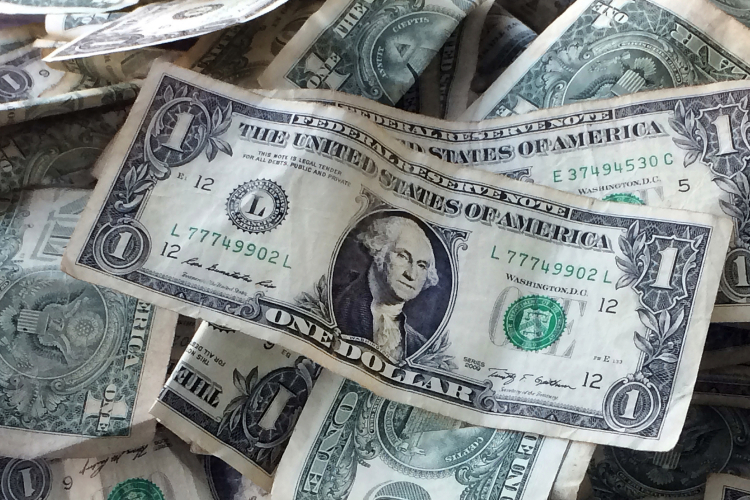
For generations, Washington worshiped a strong dollar.
Presidents invoked it as shorthand for American confidence, fiscal prudence and global dominance. The dollar’s strength was institutionalized.
President Trump is not one to genuflect to conventional economic assumptions. In his hands, the dollar is no longer a monument to defend. It is a lever to pull, a weapon to deploy—and, above all, a tool to remake America’s economic order.
Washington signals suggest dollar’s slide is neither incidental nor temporary.
Last Friday, Trump formally nominated former Federal Reserve governor Kevin Warsh to be Federal Reserve Chair.
Warsh, who served on the Fed board during the 2008 financial crisis, is a longtime skeptic of strict inflation targeting. Warsh will replace Jerome Powell, whose term ends May 15, during a period of friction over the Fed’s independence.
He has voiced support for low interest rates and pro-growth policy—positions that align with the administration’s economic doctrine.
Markets responded swiftly. Gold and silver prices fell initially. Bond yields moved higher, reflecting expectations that the Fed would soon align with White House priorities: industrial strategy.
And in a campaign season, the message will grow louder: Trump is recasting monetary power as political capital—driving economic nationalism not just through tariffs, but through the Fed.
This alignment of fiscal and monetary posture sends one message: the United States is not only comfortable with a weaker dollar—it is pursuing one.
That stance would once have rattled global markets.
But today, it reads consistent with Trump’s doctrine of economic nationalism. The greenback declined as GDP accelerates and stocks surge. Where past administrations saw contradiction, this White House sees confirmation.
Trump considers a weaker dollar essential to rebuilding U.S. manufacturing. As the currency depreciates, American goods become more competitive abroad. That competitiveness, long eroded by globalization and outsourcing, is the beating heart of his reshoring agenda.
A softer dollar also helps narrow the trade deficit, a long-standing irritant in Trump’s worldview. By raising the prices of imports and lowering prices of exports, it rebalances trade flows without multilateral agreements.
And it functions as stimulus. With one shift, the administration can loosen financial conditions without navigating congressional gridlock. Markets feel the tailwind. Consumers may not notice—but factories do.
Multinational corporations with vast overseas earnings benefit from favorable currency translation. As profits are converted into dollars, earnings rise. Equity markets, which Trump treats as a proxy for presidential performance, rise with them.
There’s also political logic. A declining dollar discourages offshoring. Tariffs and tax reforms have already made foreign production less attractive. Currency policy now completes the triangle, reinforcing the case for domestic reinvestment.
Additionally, during Trump’s first year, foreign companies committed more than $18 trillion to U.S. based projects, marking an unprecedented vote of confidence in American industry.
The dollar, once a passive bystander to global capital, is now conscripted into Trump’s nationalist playbook.
The shift isn’t tactical—it’s philosophical.
Trump has long rejected the post-Cold War consensus that equated open trade and free capital with national strength. In his view, those policies hollowed out the middle class and mortgaged American autonomy.
The critique isn’t entirely his. In October 2003, writing in Fortune, Warren Buffett issued a stark warning: “Our country has been behaving like an extraordinarily rich family that possesses an immense farm. In order to consume four percent more than we produce—that’s the trade deficit—we have, day by day, been both selling pieces of the farm and increasing the mortgage on what we still own.”
Back then, it was an economic metaphor. Today, it’s geopolitical. Trump isn’t just adjusting exchange rates—he’s trying to buy back the farm.
Still, the consequences of a declining dollar are unfolding across global markets. Though gold and silver initially dipped on the Warsh nomination, gold later surged past $5,000 per ounce—a historic milestone—as investors increasingly seek hard assets amid waning trust in fiat currencies.
The rally reflects a broader loss of confidence in traditional monetary policy, amplified by political resistance to the Federal Reserve’s past orthodoxy. Trump’s stance—favoring a weaker dollar to support American industry—is gaining validation as market sentiment shifts away from the old financial order.
Oil remains elevated but below critical thresholds. As of January 30, Brent crude trades in the mid-$80s per barrel, according to Trading Economics—well below $90.
Bond markets, too, are adjusting. The 10-year Treasury yield has climbed to 4.3%, as investors reprice risk in light of the Warsh nomination. Warsh, a critic of inflation targeting, is expected to align with the administration’s growth-first monetary posture. International reactions were swift.
Inside the White House, none of this raise’s alarm. For Trump’s team, global disruption isn’t an accident. It’s validation.
At the core of the Trump doctrine is sovereignty. He dismisses the idea that the U.S. must weaken its domestic economy to sustain the global financial system.
The dollar’s reserve currency status historically required American consumers to overconsume and U.S. industry to underproduce—an arrangement tolerated for the sake of global stability.
But Trump no longer accepts that trade-off. In his view, currency policy should serve American workers, not foreign bondholders. While Wall Street may fear a weaker dollar, Trump insists it's what Main Street needs.
The dollar remains the world’s reserve currency, but the expectation that the U.S. will always defend that role unconditionally is starting to erode.
Dollar’s decline isn’t a mistake. It’s strategy.
In this worldview, cheaper currency isn’t a sign of weakness. It’s the cost of national renewal.
Executives are reshoring and hedging currency exposure. But that’s just playing defense.
To lead, U.S. firms must design revenue models that benefit from a weaker dollar, not merely withstand it. That means pricing in local currencies, scaling non-dollar earnings and baking currency resilience into operations—not just financial statements.
Business leaders can no longer pretend that the Fed floats above politics. With leadership now aligned with the White House, every strategy—whether political, financial or corporate—must account for ideology, not just interest rates. This isn’t theory … it’s the new operating reality.
