




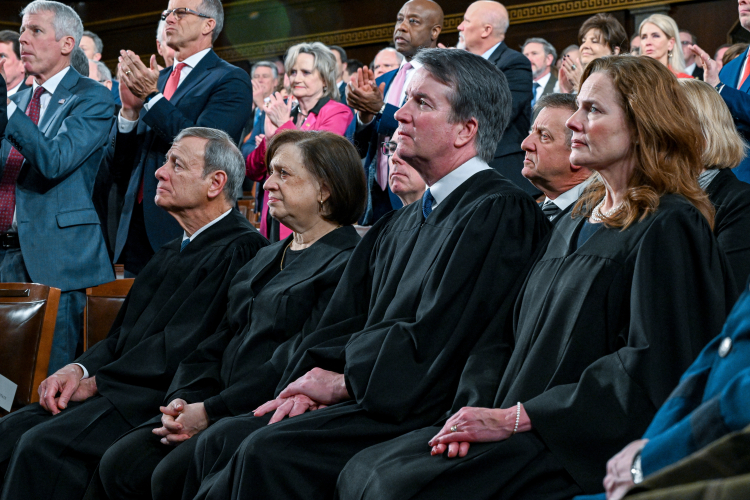
Does anyone else get a little weary of the peanut gallery every time a court issues a ruling on a matter of national interest? Have you read Hobbes, Locke, the authors of the Federalist Papers, those scholars opposed to ratification of the Constitution and 500 years of legal history? No, I didn’t think so. Please leave the punditry to me!
Within minutes of a major decision, social media fills with confident declarations about what the Constitution “obviously” requires. The problem is that most of those offering commentary have little understanding of how our legal system developed or how it functions.
Sit back and enjoy a quick primer by America’s most brilliant legal scholar…..
Many of the legal principles we use today trace their roots to Anglo-Saxon England. Justice was administered locally in the “hundreds” and “shires,” where disputes were resolved based on established customs. One of the earliest written legal codes in England, the Laws of Æthelberht (circa 602), simply recorded legal principles that had already developed through practice.
At that time England was a patchwork of kingdoms, and the law varied by locality. But after the Norman Conquest in 1066, the English crown began to standardize the administration of justice. Royal judges traveled the country hearing disputes, and their decisions were recorded and increasingly relied upon in later cases. Over time the most sensible and widely accepted legal principles were adopted throughout the realm. In this way a unified system of precedent emerged—the common law.
Common law is not a set of statutes enacted all at once. It is an evolving body of judicial decisions in which courts analyze facts and apply established legal principles. Out of those cases emerge rules that guide future decisions. It is a remarkably organic system—one grounded in logic, continuity, and experience. It’s a beautiful thing. If it was a woman, I’d marry her.
Statutory law, of course, is an essential component within the “body of law.” Legislatures at the state and federal level may enact statutes that override or modify common-law rules within their jurisdiction. Yet courts frequently rely on common-law principles when interpreting those statutes.
Above both stands constitutional law. The Constitution represents the agreement among the original thirteen states establishing the framework of the national government. It is one of the most extraordinary political documents ever produced, not because it resolves every issue with perfect clarity but because it recognizes the realities of human nature.
The framers understood that power attracts ambition and that institutions will seek to expand their authority. Rather than trusting any single branch of government, they divided power among competing institutions, each with incentives to defend its own prerogatives.
This structure inevitably produces disputes about where authority begins and ends. But those disputes are not a flaw in the system—they are its design.
The Supreme Court’s recent decision in Learning Resources, Inc. v. Trump illustrates this process in action.
The case concerned the International Emergency Economic Powers Act (IEEPA), a federal statute that allows the president to regulate certain economic transactions during a national emergency. The question before the Court was whether that authority included the power to impose tariffs.
The statute does not specifically mention tariffs. Supporters of the administration argued that because the law authorizes the president to regulate imports, it implicitly permits tariffs as one method of doing so.
The majority of the Court disagreed. Applying what has come to be known as the “major questions doctrine,” the justices concluded that when Congress intends to grant the executive branch authority over matters with enormous economic consequences, it must do so clearly. Because tariffs are a significant exercise of governmental power—raising revenue and reshaping international trade—the Court concluded that Congress would have needed to speak more explicitly.
Justice Brett Kavanaugh, writing for the dissent, offered a thoughtful counterargument. He noted that the statute authorizes the president to regulate imports and argued that tariffs are simply one traditional means of regulating imports. Indeed, he observed that the president unquestionably has the authority to impose a complete embargo on foreign goods under the statute. If the president can prohibit imports entirely, Kavanaugh reasoned, it is difficult to see why he could not impose a lesser measure such as a tariff. Moreover, Kavanaugh explored the history of the enactment and execution of the IEEPA to extract legislative intent, all good arguments.
Both majority and minority positions reflect legitimate methods of legal reasoning. I would greatly enjoy arguing the pro-tariff and the no-tariff side of this case ( I can be kind of a nerd when it comes to this stuff).
What is most notable, however, is what the Court did not do. It did not “step out of its lane” to examine broader constitutional questions, such as whether Congress can delegate its taxing authority to the executive branch. Instead, the Court resolved the case narrowly by interpreting the statute itself, not opining on issues that weren’t before the Court. That restraint is a hallmark of responsible judging.
In other words, the system worked exactly as it should.
Congress enacted a statute. The executive branch interpreted it expansively. Private parties challenged that interpretation in court. Judges examined the text, considered the structure of related statutes, and issued competing opinions explaining their reasoning.
Reasonable jurists disagreed. That is not a crisis—it is the process.
Our constitutional system depends not on universal agreement but on disciplined argument grounded in law, history, and precedent. When courts engage in that kind of careful analysis, they reinforce the legitimacy of the rule of law.
The real danger arises when judges abandon that discipline and decide cases based on desired outcomes rather than legal reasoning. Judicial activism—deciding first what result one prefers and then constructing legal arguments to justify it—poses a far greater threat to the constitutional order than any single controversial decision.
When judges faithfully interpret statutes and the Constitution according to their text, history, and structure, our system remains one of the most durable and remarkable political achievements in human history.
And if that discipline endures, there is every reason to believe the American constitutional experiment will continue to thrive for centuries to come.
