




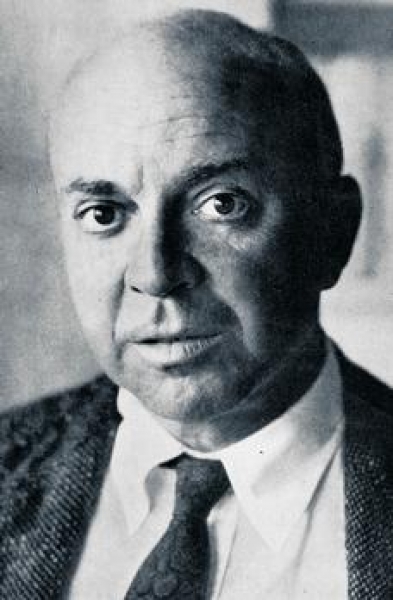
Like most boys, I idolized my father, and with good reason. He was always the big man in the room. His energy was pervasive, filling every nook and cranny. Not just a big, but a HUGE, fun-loving personality. What made him truly unique was the other side of him: he was really smart. Supreme Court Justice Lewis Powell told folks that Marston Smith had the keenest mind of anyone he knew.
Dad’s quick rhetorical and oratory skills were bar none. His intellectual love was the law. He had an extreme curiosity for practical matters—public policy, business, technology; he knew the science of the combustible engine and how many other things worked. He was logic incarnate.
With all that said, I never knew him to be wowed by a great piece of literature or to be caught up in the mysteries of theology. Although he served the church, head of the vestry, etc., his world was practical (raise money, build things, make it happen). When asked, he would merely say his creed was as simple as 1 John 4:8: “God is love.” I can spend hours on the phone talking to friends about history, great literature, human nature and obscure topics like British antiquarianism or the Hypostatic Union. I don’t remember Dad having an ethereal side. He dropped out of the University of Virginia to fight the Nazis, then went to law school, got married, had kids and was always engaged in practical matters, much of it out of self-imposed or cultural duty to serve others.
He now lies in Richmond’s Hollywood Cemetery, among generations of relatives. The marker on his grave reads:
A Man of the Mind
The other night I finished a 500-page book of Chekhov short stories and was hankering for something new to read. I went to my bookshelf and pulled out a book called The Best Times. Inside the cover was written, “To Kitty and Marston Smith, with affection,” and signed John Dos Passos.
I really had never given much thought to Mr. Dos Passos since I was 11, when I killed my first duck on his Potomac River farm in Sandy Point, Virginia. I never read any of his acclaimed books because it was my understanding that when he wrote them he was an ardent leftist. I figured I wouldn’t have enjoyed them. Then I remembered my father and he were friends. I began reading. I was mesmerized by Dos Passos. Dad was as Virginia as spoonbread. Not a bohemian radical in any sense! Impeccable manners. He wore a coat and tie while driving a tractor. He hit the beaches on D-Day, fought in the hedgerows. As a young officer, he led his men in defense of Bastogne. Despite being wounded, he stayed on the field. When we watched football on Sundays, he would stand (we all did) when the Star-Spangled Banner was played.
What did my father have in common with a “fellow traveler”? A Communist! Dad had a captured German Luger in his closet. Growing up, I could imagine Dad meeting Harry Dexter White or Alger Hiss in a dark alley, Luger in hand, and taking them out.
In The Best Times, Dos Passos tells the story of his life, beginning with his father’s remarkable story and his boyhood, and continuing through the Spanish Civil War. I was entranced, in complete wonderment. No one loves reading about the Moveable Feast days more than your humble author. When I first read The Sun Also Rises, I imagined myself as an expat in Paris, having an absinthe at Deux Magots. Lady Brett Ashley would be in love with me; night after night we would go dancing at Le Boeuf sur le Toit. Dinner parties where Cole Porter would play the piano. Grabbing a midday outside table at Café de Flore and people-watching. Meeting up at the Ritz with Hemingway, Fitzgerald, James Joyce and Ezra Pound. Oh, how I have often thought of being there, part of this crowd, and how I would’ve loved it.
The Best Times is a Moveable Feast on steroids. He knew all the players. Dos Passos is a sympathetic figure. I liked him. He was not a solid RED; I view him as more “pink.” He was not told how to think or under the dictatorial thumb of the Party. He had a gentleness about him, perhaps a gentlemanly quality, where he was not at all harsh about any of his critics and was a bit self-effacing. I like that quality. Although, as you may know, I’m very conservative, I did not in the least think of him as an adversary while reading about his adventures in socialist and communist causes. I understand that whether it is Caesar, Napoleon or Lenin, their lives and ideologies are shaped by the variables of the times. We shouldn’t hate figures of the past; we should understand what made them tick if we want to avoid the dangerous ideologies they favored. I never once didn’t like Dos Passos while reading this book, even though he was a regular contributor to and on the executive board of The New Masses magazine, a publication that was overtly and proudly Marxist.
I loved the book because I was fascinated with Dos Passos—who he knew, who he hung out with, the historic personalities, his wanderlust for travel, new adventures and thirst for learning. His father’s life is worthy of a great biography. He wanted his son to have a classical education, but it was much more than just Choate and Harvard. As a young boy, Pop sent John to Peterborough in London. After Choate and before Harvard, he sent him on a grand tour of Europe with a private tutor. At Harvard it was literature and the classics. After Harvard, he was sent to Spain to study architecture, art and Spanish culture. He threw himself into the native language wherever he was. In Greece he studied Thucydides; in Rome he read Gibbon. Wherever he was, he soaked in the most meaningful works of that culture. And my God, his traveling! He spent extended periods of time wherever there were revolutionary factions a-brewing. He craved learning. In 1921, he visited the Soviet Union, hiked in the mountains along the Caspian Sea, could not get out, witnessed starvation, rode Soviet boxcars, and escaped through Iran and Iraq, traveling on a camel in a caravan led by Agail Arabs.
He and Hemingway were very close. Their friendship broke up during the Spanish Civil War, when Dos Passos had his Whittaker Chambers moment and saw the horror of communism as it really was. He changed his stripes and became a conservative. He settled on the Sandy Point farm (where I killed my first duck) in 1949, and, of course, this is when his friendship with my father started. Dad was his lawyer. Legend has it that Dad wrote the last chapter of Easter Island, which wasn’t quite finished when Dos Passos died. Dad had a 39-ish-foot Chris-Craft-looking boat, the Ole Blue, and they spent time on the Potomac together. What did they talk about!
I feel a thin-space interconnectedness that’s hard to explain. I’ve always had a love for Arthurian legend. I’m the last of four boys, and my brothers all remember that Dad named all the dogs on our farm after Arthurian characters for years. I didn’t know he had the same passion I did. A couple of years ago, my boy Coleman told me he got a cat and named him Arthur. I asked why. He told me he loved Arthurian legend. He didn’t know that I did. There’s more than just a handful of these types of unexplained instances. This week I learned another. My dad, my own conservative, practical-minded father, had this direct and meaningful connection to the principal character of the Moveable Feast era.
I’m not sure what these father-to-son episodic events mean, but they mean something.
