




The U.S.-China trade truce, negotiated after a tumultuous back and forth that saw tariff rates climb as high as 145%, a ban on Chinese rare-earth minerals, and a massive reduction in Chinese purchases of US soybeans, is set to expire in just seven weeks. Jamieson Greer says that the two sides are still far apart but that Washington still has plenty of time between now and when the truce expires. Scott Bessent agreed, saying that America is “not in a rush.” Since the truce began in May, some outlets have alleged that China has all the cards while others report the opposite. Both miss the point entirely. The US and China should be playing two different games but for too long, we’ve been trying to play theirs. Whatever advantages China has in these negotiations are because we handed them over.
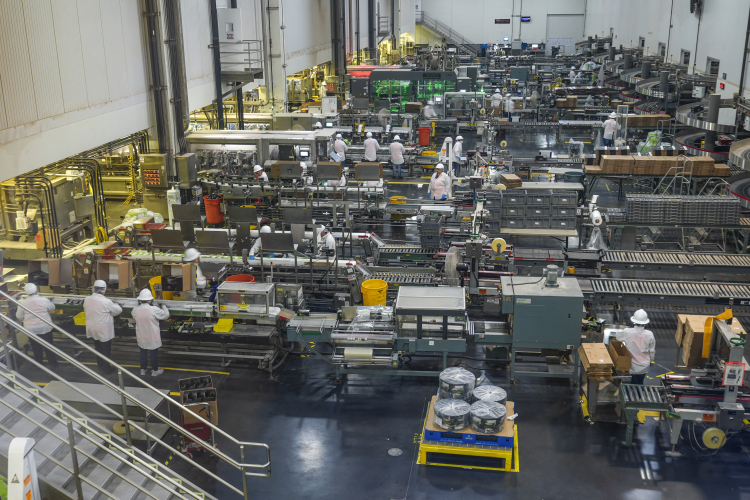
Consider manufacturing, which U.S. officials insist has been “hollowed out” and lament that “we don’t make things here anymore.” While employment in the manufacturing sector has declined over the past 50 years, manufacturing output remains high. The US employs some 12.6 million manufacturing workers. China, by comparison, has 212 million as of 2024. With over sixteen times as many workers, how much more output does China produce? Only about 60% more than we do. American workers are not in competition with cheap Chinese labor. They are playing an entirely different game that is capital-intensive, high-skill, and high-output. Volume and low wages, as in the case of China, cannot replicate this.
The Game China is Playing
But on the world stage, China holds different cards altogether. Countries are looking to Beijing as a trading partner more today than at any time in recent memory. This is not because China has somehow earned this status. It’s because of what American trade policy accomplished over the past year: pushing away our friends and uniting our enemies. Tariffs, from their ever-changing rates, exemptions, and start dates to their recent, shifting legal justifications, have made the U.S. so unpredictable a trading partner that traditional allies are cutting deals elsewhere. China has been more than happy to fill this role. We didn’t weaken China’s global position. If anything, we handed it to them. That’s the game that China is playing. While the White House continues to find new legal mechanisms to restrict access to our markets, China has been competing for partnerships and with them, global influence.
Now, the U.S. and China have proposed a “Board of Trade,” where officials from both countries will sit down and actively manage the trade of non-sensitive goods between the two countries. The scope for special favors, carve-outs, and tariff engineering will be a boon not for American manufacturers, but for the trade lawyers and industry lobbyists.
If we strip away the rhetorical flair, the Board of Trade represents a clear case of central planning by committee. This is exactly the type of system that China has been leaning on for decades and that the U.S. spent the Cold War era chastising. It’s also a game that China is built to play. When the board calls for buying more soybeans or shipping fewer magnets, Beijing can simply order their state-owned enterprises to comply. Washington has no way doing the same. In effect, the US would be haggling over a list of products and tariff rates with a country that can rewrite its own economy by executive decree.
But that’s not the only way in which the U.S. is starting to copy China. Over the last two years, Washington has taken ownership stakes of more than 30 companies. 10 percent of Intel, 15 percent of rare-earth mining company, MP Materials, a golden share of U.S. Steel, and most recently a 35 percent stake of a Venezuelan oil producer. In other words, the federal government not only regulates these firms and is a major customer of these firms, but now also is part-owner of these firms. State-capitalism is Beijing’s model, not America’s, and the more we try to play their game, the more we’ll fall into the same traps they’re facing.
Understanding what China’s leadership is looking to get out of these negotiations means that we have to look beyond the rhetoric and remember that they are rational actors responding to incentives who want to stay in power. Those incentives operate on decade-long time horizons, not the short election cycles we have in the US. President Xi and the CCP need economic performance and the nationalist credibility it brings to sustain legitimacy. American politicians, especially Republicans at this moment, want a visible win before November. Chinese officials are likely to negotiate patiently and strategically as they continue to build other partnerships around the world.
The Game the U.S. Should Be Playing
The U.S. should be playing an entirely different game than what we’ve been playing. Rather than view “access” to the American market as a commodity to be sold around the world, we should instead view it for what it is: the world’s leading source for innovation. Because of this, we have the ability to make engaging with the US more valuable than anything China could ever offer.
To do this, American businesses, particularly manufacturers, need access to the world’s raw materials and components to produce the advanced goods the rest of the world cannot replicate. Restricting that access through tariffs and industrial policy does not protect the American worker, it shackles them. A tariff on Chinese-made steel doesn’t hurt Beijing, it raises the cost of production for the engineer in Ohio trying to build a world-class product. A restriction on rare-earth components does little to weaken China as they can find new buyers quickly. As we found out, it does weaken the American manufacturer who needs those components to stay at the forefront of technological progress since there are few comparable sellers.
The first Trump administration understood this better. Broad tax cuts and deregulation coupled with comparatively narrower and lower tariffs lowered costs for American manufacturers and helped lead to a genuine rise in manufacturing output. Today, the manufacturing sector is growing but only in the sectors with the lowest tariffs and only during a year when tariff rates are relatively stable compared to 2025.
China’s Real Weakness
China holds the upper hand as long as we try to compete on their terms. Their economy is best described as “party-state capitalism.” Under this system, the country’s resources can be directed by party officials more easily than under the capitalist system that we have in the U.S. This system does have the benefit of being good at solving a specific and identifiable goal. The Soviet Union, for example, was the first country to put a man in space and send probes to Venus. However, the Soviet Union also collapsed under the weight of its own inefficiencies.
This is the flaw that no command-and-control economy, including China, can overcome. Markets are remarkably good at solving economic problems, constantly weighing competing goals against one another and determining not just how to build something, but whether it’s worth it to begin with. Markets are also incredibly good at fostering innovation, something that no committee can simply will into existence. China’s reliance on producing imitations of goods stands as evidence of this. This is America’s advantage in these negotiations. China can copy the products we make and they can throw their country’s resources at solving a specific and identifiable problem, but they cannot copy the system that creates those innovations.
The U.S. can hold all of the cards in these negotiations, but only if we stop trying to play China’s game. Unfortunately, we’re doing the opposite. Our federal government has made the U.S. an unpredictable trading partner through ever-shifting tariffs, and now has proposed a committee to manage trade by decree, taken ownership stakes in private companies that they regulate and do business with. At each turn, we’ve taken a genuine American strength and traded it for one of Beijing’s weaknesses.
