




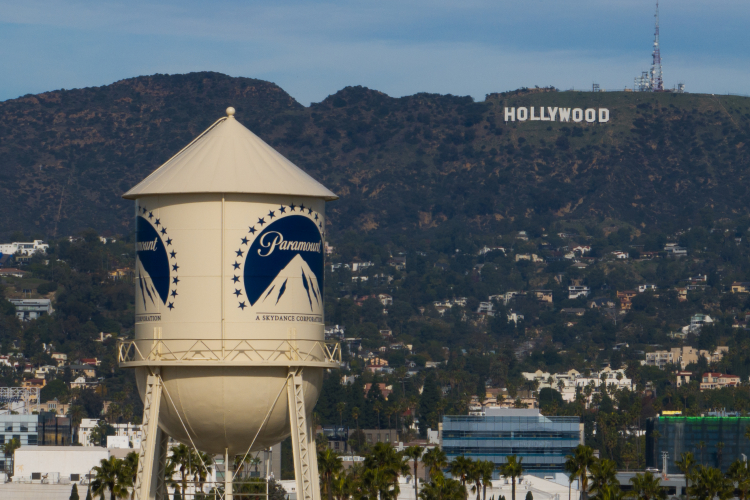
Twelve state Attorneys General have just settled their lawsuit that tried to block Paramount from acquiring Warner Brothers. The case was brought under federal antitrust law. The settlement, however, goes far afield from antitrust. A state Attorney General is a political office-holder. It is neither surprising nor inappropriate that each would bring political considerations into the decision to sue, and now to settle a suit, against a merger of the prominence of Paramount-Warner Brothers.
What is inappropriate, however, is to extract promises that have nothing to do with antitrust in order to settle an antitrust case.
Antitrust officials in Europe, the UK, and at the US Department of Justice approved the merger. These agencies hold diverging approaches to antitrust, with the European Union authorities perceived as the most aggressive. That all three approved the merger is a strong indicator that the merger posed no antitrust issues.
The twelve states continued their opposition, nonetheless. The terms of the settlement indicate why.
What the states have obtained has little to do with antitrust and a lot to do with political control of the media and saving jobs in California. The federal anti-merger law passed in 1914 prohibits mergers that may “substantially… lessen competition or… tend to create a monopoly” in any “line of commerce.”
Over the 112 years since passage, the words of the statute have been interpreted by federal courts to require a definition of relevant market as a “line of commerce.” In film, the concept of a relevant market as movies produced for live audiences in movie theaters is antiquated. Streaming services and cable channels actively compete with in-theater releases. AI assisted film-making has far less need for a back-lot, costumes, and props. The studio-contract system of actors has long been supplanted by actors as independent competitors. With computer-assisted manipulation of actors’ images, acting itself has taken on a new meaning.
A merger between Paramount and Warner Brothers in the 1950’s, before any of these innovations, would have raised serious antitrust issues in the relevant market of film-making for theaters. That is no longer a relevant market.
What the State Attorneys General have obtained is not an antitrust decree but a set of concessions to address concerns about growing right-wing influence in cable news. The State Attorneys General voiced concern that the merger would combine CNN and CBS under single (feared conservative) management.
The settlement requires Paramount, within six months, to create an independent review committee to prevent that from happening. Presumably, the federal court would be available to monitor compliance with this provision of the settlement—though how that could be done consistent with the First Amendment is hard to see.
A non-political federal judge would have to decide whether the editorial direction of CNN and CBS had tilted too far to the right.
Even assuming this provision is practical, it has nothing to do with antitrust. When the FTC last year conditioned the approval of a merger of advertising firms on their not steering advertisers away from conservative outlets, liberal critics of the Trump Administration were outraged at the insertion of conservative politics into what should have been a purely antitrust question. The same is true here, when the insertion of politics is against conservatives. Neither intrusion is justified.
Other provisions in the decree require Paramount to film a minimum number of movies in the US for in-theater release and to invest 1.5 billion dollars in US-made films over the next five years. This substitutes the Attorneys General’s business judgment for that of Paramount. That Paramount was willing to accept the conditions suggests they were likely to take these steps anyway; but if business conditions change, and consumers demand more film streaming, for instance, than production for theater release, then these terms will condemn Paramount to an uneconomic business plan.
The AG’s goal was to preserve jobs in production of films for theaters. As political office-holders, their goal was not surprising. California Governor Newsom’s public pressuring of California’s Attorney General to make this deal advanced the goal of keeping jobs in Hollywood.
However, that is not a legitimate goal of antitrust laws. It is applying pressure by a government agency at a moment when it has leverage to achieve a political objective.
Ironically, this illustrates the very reason many businesses are fleeing California—to avoid the coercive powers of state government, which Paramount might itself decide to do in five years, when the terms of this agreement run out.
