




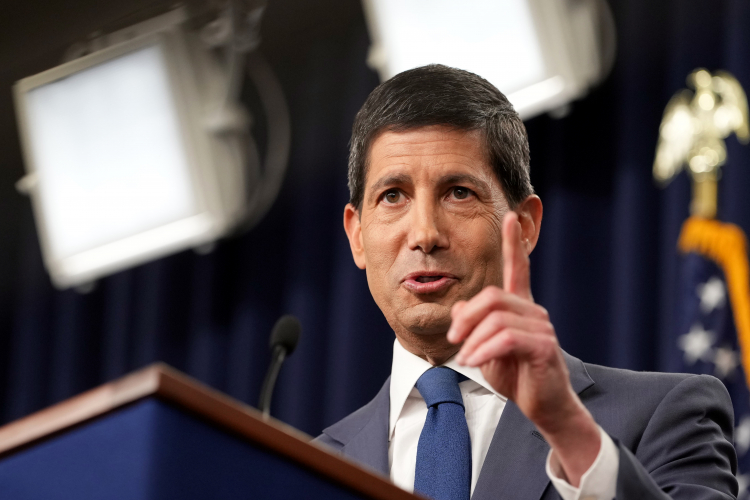
To hear the financial commentariat tell it, Kevin Warsh’s decision to strip forward guidance from the FOMC statement is nothing short of monetary heresy. Cue the rending of garments, the gnashing of teeth, and the apocalyptic warnings that markets will collapse without a central banker tucking them into bed with explicit rate forecasts every six weeks.
How did we ever survive before central bankers started doodling their musings about the future economy in the "dot plot"?
The outrage misses the point. For fifteen years, central bank communication hasn’t been clarifying—it’s been suffocating. By telling the market exactly what the Fed intended to do, forward guidance created a massive, self-referential echo chamber. The Fed signaled its expectations, markets dutifully priced them in, and the Fed then looked at those same financial conditions to confirm its own genius.
Worse still, forward guidance relied entirely on the Fed’s macroeconomic forecasting ability, which, as the "transitory inflation" debacle proved, has been abysmal. Bound by its own public promises and a stubborn, almost obstinate reluctance to admit error, the Fed routinely ended up locked into bad policy far longer than if it had simply kept its opinions to itself. It wasn’t price discovery; it was central bank narcissism built on nothing more than economic tea leaf reading.
F.A. Hayek diagnosed this exact delusion in his 1974 Nobel speech:
"To act on the belief that we possess the knowledge and the power which enable us to shape the processes of society which we do not possess, is likely to do much harm."
Even with an army of PhD economists, supercomputers, and endless streams of data, the mighty Fed simply cannot accumulate enough real-time information to plan or predict the direction of a complex global economy. Pretending otherwise has done immense harm.
Ditching pre-baked guidance forces a long-overdue return to the wisdom of crowds. Instead of thousands of Wall Street analysts burning midnight oil to parse adjective tweaks in Fed statements, market participants actually have to analyze raw economic fundamentals again.
For real investors, this is a massive upgrade. You get a cleaner, less diluted market signal—a genuine reflection of real-world supply, demand, and risk. Sure, the signal isn't completely pure yet (various regional Fed governors still seem physically incapable of keeping their mouths shut between meetings), but removing the Chair's explicit forward promises strips away the loudest voice in the room. In fact, we’d probably all be better off if the Federal Reserve was so unobtrusive that nobody outside of an economics department even knew who the Fed Chair was. Alan Greenspan understood the power of ambiguity when he famously quipped in 1987: "Since becoming a central banker, I have learned to mumble with great incoherence. If I seem unduly clear to you, you must have misunderstood what I said." At least intentional obscurity kept the market guessing rather than co-dependent.
None of this means we should start fitting Warsh for a halo just yet. Ending forward guidance is an elegant philosophical stance in calm waters, but markets always test a new Fed Chair. The real test won't come when inflation is settling or growth is steady; it will come when a sudden credit shock or market panic hits and Wall Street starts screaming for hand-holding.
Until then, let the central bank hand-wringers wring away. The market is finally being treated like an adult again—let’s see if it remembers how to act like one.
